
You’ve probably seen kids build towering castles or glowing cubes with colorful magnetic tiles, and wondered how they always snap together. Unlike regular magnets that push apart when misaligned, magnetic building blocks like Magna-Tiles and CONNETIX seem to defy the basic rules of magnetism. The answer lies in clever engineering that reimagines how magnets interact with each other. These toys use a precise internal arrangement that guarantees attraction in every direction, making construction intuitive for toddlers and fascinating for adults.
In this guide, you’ll learn exactly how magnetic blocks work, from their unique polarity setup to the physics behind their satisfying snap. We’ll cover the Z-axis design, alternating edge patterns, internal construction, and the mathematical models that explain their behavior.
The Z-Axis Magnet Orientation That Changes Everything
Vertical Polarity Instead of Horizontal
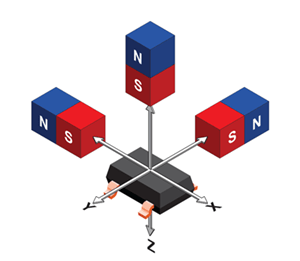
Standard bar magnets have their poles on opposite ends along the horizontal plane. Magnetic blocks flip this concept entirely. Their poles align vertically along the Z-axis, meaning the magnetic field projects up and down from the tile surface rather than side to side.
This vertical orientation enables two critical interactions. First, one tile’s top face can attract another tile’s bottom face. Second, adjacent tiles can connect edge-to-edge because the magnetic fields extend outward from the perimeter. Because the force runs perpendicular to the tile face, it doesn’t interfere with rotational alignment, enabling seamless connections regardless of orientation.
Why Z-Axis Beats Traditional Alignment
Traditional magnetic toys require users to match north with south manually. Flip a magnetic train car the wrong way and it repels instead of connects. Magnetic blocks eliminate this frustration completely. The Z-axis setup decouples magnetic polarity from physical orientation, so children never need to figure out which way a block should face. This makes play more fluid and less error-prone, especially important for young builders developing fine motor skills.
The Alternating Edge Polarity Pattern
Two Magnets Per Edge, Not One
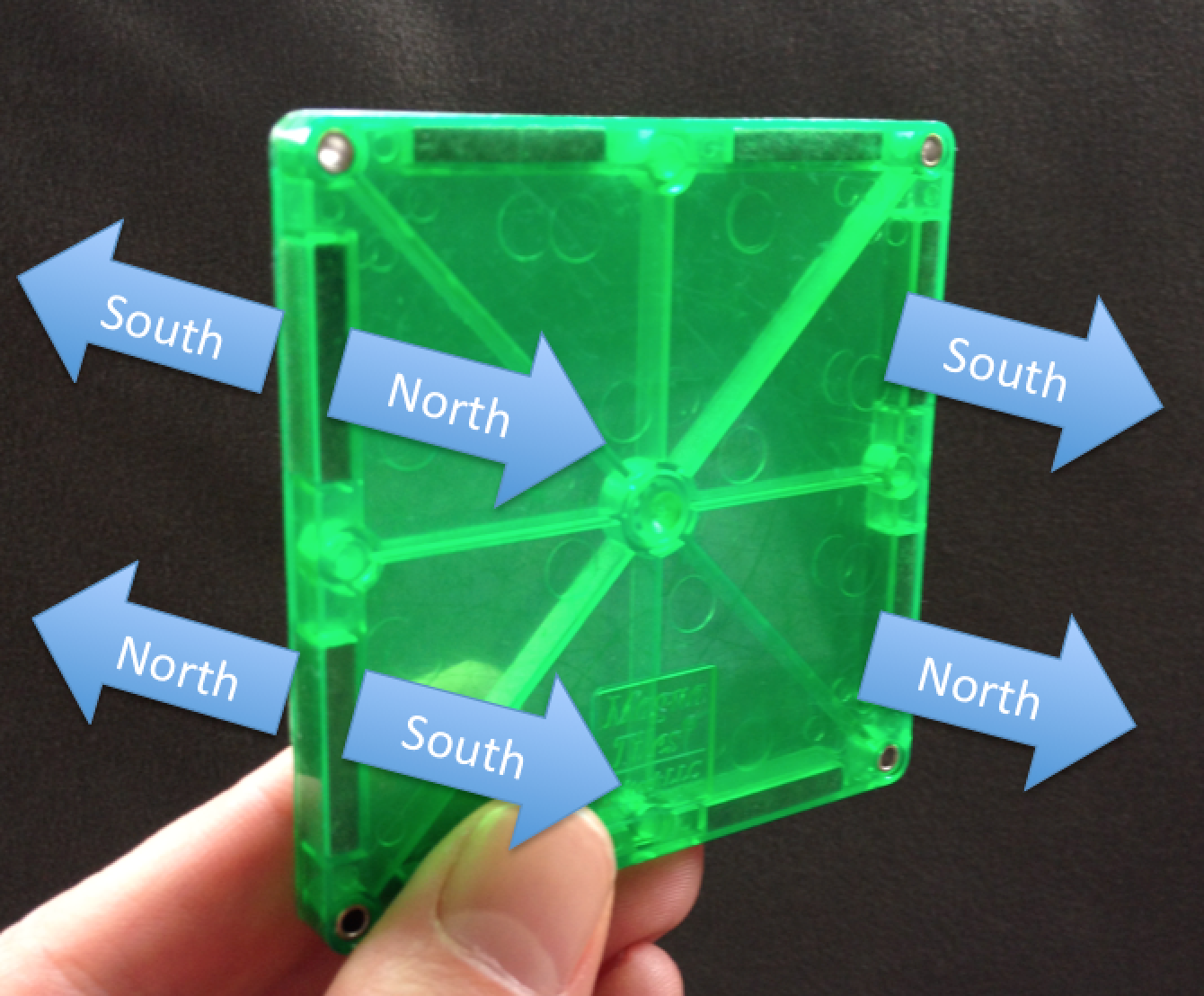
Each side of a square magnetic block contains two separate magnets embedded within the plastic frame. These sit at the one-quarter and three-quarter positions along the edge. This dual-magnet design is essential for achieving universal attraction across all configurations.
Opposing Poles on the Same Edge
Here’s the key innovation: the two magnets on a single edge are oppositely polarized. If the left magnet has its North pole facing up, the right magnet has its South pole facing up. This alternating pattern continues around all four edges, creating a consistent push-pull rhythm between neighboring magnets around the entire perimeter.
Why This Creates Universal Attraction
When two tiles approach edge-to-edge, the alternating polarity ensures adjacent magnets always present opposite poles to each other. Even if you rotate one tile 90 degrees or flip it upside down, the pattern guarantees a complementary match. Think of it like a puzzle where every piece has both connectors on each side. No matter how you turn it, there’s always a fit. This is why magnetic blocks snap together so reliably, because they’re engineered to avoid repulsive configurations during normal use.
Internal Construction and Safety Features
Embedded Magnet Design
The magnets inside these blocks are small, rectangular units made from ferromagnetic materials containing iron, nickel, or cobalt. They get encased in multiple layers of durable, BPA-free plastic (typically ABS or polycarbonate), so they’re completely sealed and inaccessible.
You can’t see or touch the magnets, but you can feel their pull when blocks come close. This encapsulation is crucial for safety, especially with toddlers who might otherwise swallow loose magnets.
Why Plastic Housing Matters
Plastic serves two essential purposes. First, it acts as a safety barrier preventing ingestion and corrosion. Second, since plastic doesn’t conduct magnetism, it doesn’t interfere with the magnetic field. It simply guides and contains the force. Manufacturers precision-mold the plastic around the magnets to keep them perfectly aligned, ensuring consistent performance across thousands of connections.
How Magnetic Blocks Beat Standard Magnets
The Limitations of Regular Magnets
Regular magnets follow a simple rule: opposites attract, likes repel. But this creates a usability problem. Try connecting two magnetic name tags and you’ll often feel a sudden push if they’re flipped wrong. Rotating or flipping exposes like poles, causing repulsion. This dependency on orientation makes standard magnets impractical for freeform building.
Flip-Proof and Rotation-Tolerant Design
Magnetic blocks solve this with two key features. Rotation tolerance means you can turn a tile any number of 90-degree increments and it still connects. Flip tolerance means flipping it over doesn’t break the connection, because the edge polarity pattern remains complementary. This is impossible with standard magnets but achieved through the combination of Z-axis orientation and alternating polarity.
No Precision Required
Unlike LEGO, which requires exact stud alignment, magnetic blocks connect even when slightly offset. The magnetic force pulls them into perfect alignment once they’re close enough. This self-correcting behavior gives users a satisfying snap sensation and encourages experimentation without fear of failure.
When Repulsion Can Happen
Rare Misalignment Scenarios
Despite being designed for constant attraction, repulsion can occur in unusual placements. For example, placing the top half of one tile against the bottom half of another in a staggered stack can force like poles together. Trying to connect corner to edge instead of edge to edge can also cause pushing. But these scenarios rarely happen during typical play because natural building methods keep edges aligned.
A Hidden Teaching Moment
When repulsion does occur, it becomes a hands-on lesson in magnetism. The child feels resistance, flips the piece, and suddenly it snaps into place. This tactile feedback reinforces the concept of magnetic polarity without needing a lecture, turning play into learning through doing.
The Physics Behind the Snap

The Monopole Approximation Model
While real magnets always have two poles, scientists model magnetic block behavior using a monopole approximation. This treats each magnet as a single point source of north or south polarity. For a square tile, eight monopoles sit at the quarter and three-quarter positions along each edge, with alternating polarities around the perimeter.
Magnetic Energy and Stability
The interaction energy between two monopoles follows the formula E = q₁q₂/r, where q₁ and q₂ are polarity values and r is the distance between poles. When two tiles are perfectly aligned and stacked, every north pole faces a south pole across a small gap. This configuration yields the lowest energy state at approximately -54.27 units, excluding internal energy.
This deep energy well explains the strong snap. The system naturally seeks this stable position and resists deviation.
The Next-Lowest Energy State
Even when slightly misaligned, blocks remain attracted. The next-lowest energy state occurs when tiles are offset or rotated just enough that some opposite poles still align but not all. This secondary stability allows for temporary connections before blocks slide into perfect alignment, helping engineers fine-tune magnet strength and spacing.
Core Magnetism Principles You Should Know
What Magnets Actually Attract
Magnets only affect ferromagnetic materials containing iron, nickel, or cobalt. They do not attract plastic, wood, glass, or aluminum. This is why magnetic blocks use plastic shells. The material stays neutral while letting internal magnets do the work.
The Two-Pole Rule
Every magnet has two poles: North and South. If you cut a magnet in half, you don’t get isolated poles. You get two smaller magnets, each with its own N and S end. This fundamental rule underpins all magnetic behavior.
Action at a Distance
Magnetism works without contact. You can feel a pull before blocks touch, which is the magnetic field in action. The force weakens rapidly with distance following the inverse square law, which is why magnetic blocks must be close to connect.
The Historical Roots of Magnetism
Ancient Discovery
The story begins with magnetite, a naturally magnetic mineral. Ancient Greeks documented a shepherd named Magnes whose iron-studded shoes stuck to rocks on Mount Ida. The rock was named “magnet” after him. These natural magnets, called lodestones, were later used by Vikings and Chinese navigators to create the first compasses.
From Lodestone to Modern Compasses
Lodestones are magnetized chunks of magnetite, likely charged by lightning strikes. When suspended, they align with Earth’s magnetic field, pointing north-south. This principle still powers modern compasses, proving how foundational magnetism is to navigation.
Evolution to Modern Applications
Today, magnets appear everywhere in daily life. Over 80% of refrigerators use magnetic seals. Speakers convert electrical signals to sound via vibrating magnets. Hard drives store data using magnetic domains. MRI machines use powerful magnetic fields to image the human body. Magnetic blocks are just one playful application of this deep scientific legacy.
Industrial Magnetic Transfer Blocks Are Different
Not the Same as Toy Blocks
Be careful not to confuse magnetic building blocks with magnetic transfer blocks, a term used in machining. These industrial tools extend the reach of a magnetic chuck on a grinding table.
How Transfer Blocks Work
They rely on magnetic flux conduction. Steel pins or strips inside an aluminum block carry magnetic force from the chuck to a workpiece. Non-magnetic materials like aluminum prevent direct coupling but allow flux to jump gaps. This lets manufacturers hold small or oddly shaped metal parts during precision work.
Key Differences at a Glance
| Feature | Magnetic Building Blocks | Magnetic Transfer Blocks |
|---|---|---|
| Purpose | Creative play and STEM learning | Industrial machining |
| Material | Plastic with embedded magnets | Steel and aluminum composites |
| User | Children and educators | Machinists and engineers |
| Force Type | Permanent magnets | Electromagnetic chucks |
They share the word “magnetic” but serve entirely different worlds.
Benefits in Play and Learning

No-Fail Building for Young Kids
Two-year-olds can build complex shapes with magnetic blocks, something impossible with LEGO. The forgiving connection system means success is almost guaranteed, boosting confidence and engagement during early developmental stages.
Encourages 3D Thinking
Because blocks stick edge-to-edge, children can create spheres, pyramids, and moving parts, not just flat structures. This promotes spatial reasoning and early engineering skills that benefit later learning.
Tactile Feedback Enhances Learning
The snapping sensation provides immediate sensory feedback. Kids learn cause-and-effect: bring pieces close, feel pull, hear snap, structure grows. This embodied cognition strengthens neural pathways associated with problem-solving.
Troubleshooting and Care Tips
Recognizing Repulsion
If two blocks push each other, check if they’re aligned edge-to-edge. Flip one block over and try again. This teaches troubleshooting while reinforcing magnetic principles.
Avoiding Weak Connections
Weak holds usually mean dirt or debris between edges. Clean with a damp cloth to restore strength. Worn or damaged tiles should be inspected for cracks. Third-party blocks with weaker magnets can also cause weak connections, so stick to reputable brands.
Storage Best Practices
Keep blocks away from extreme heat, which can warp plastic or demagnetize the internal magnets. Store flat or in bins rather than stacking heavy objects on top. Avoid prolonged exposure to direct sunlight, as UV rays degrade plastic over time. Proper care ensures years of magnetic strength.
Frequently Asked Questions About Magnetic Blocks
What makes magnetic blocks always stick together?
Magnetic blocks use Z-axis polarity with alternating magnets along each edge. Two magnets per edge have opposite poles facing up, creating a pattern that guarantees opposite poles always meet when tiles connect, regardless of rotation or flipping.
Are the magnets inside magnetic blocks safe for children?
Yes, the magnets are completely sealed inside multiple layers of BPA-free plastic. They cannot be removed or swallowed during normal play, making them safe for toddlers when used as intended.
Can magnetic blocks ever repel each other?
Repulsion is rare but possible during deliberate misalignment, such as placing the top half of one tile against the bottom half of another in a staggered pattern. Normal edge-to-edge building always produces attraction.
What materials are used inside magnetic blocks?
The internal magnets contain ferromagnetic materials like iron, nickel, or cobalt. The exterior is typically ABS or polycarbonate plastic, which is non-magnetic and safe for children.
Why don’t magnetic blocks work like regular magnets?
Standard magnets have poles on opposite ends along the horizontal plane, requiring precise alignment. Magnetic blocks use vertical Z-axis polarity with alternating edge patterns, eliminating the need for orientation matching.
How should I store magnetic blocks to keep them strong?
Store them away from extreme heat and direct sunlight. Keep them flat in bins rather than under heavy objects. Clean edges with a damp cloth to remove debris that weakens connections.
Key Takeaways for Understanding Magnetic Blocks
Magnetic blocks work through a brilliant fusion of physics and design. The Z-axis polarity flips traditional magnet orientation, while alternating edge patterns guarantee universal attraction. Sealed plastic construction keeps children safe while preserving magnetic performance.
These blocks turn invisible magnetic forces into visible, tangible learning experiences. Whether used for toddler play or STEM demonstrations, they make abstract physics concepts concrete and engaging. Understanding how they work helps you appreciate the engineering behind every satisfying snap.
Pro Tip: Try holding two blocks near each other without touching them. You’ll feel the magnetic field pulling them together before they connect. This invisible force is the same one that powers compasses and MRI machines, just packaged in a toddler-friendly toy.