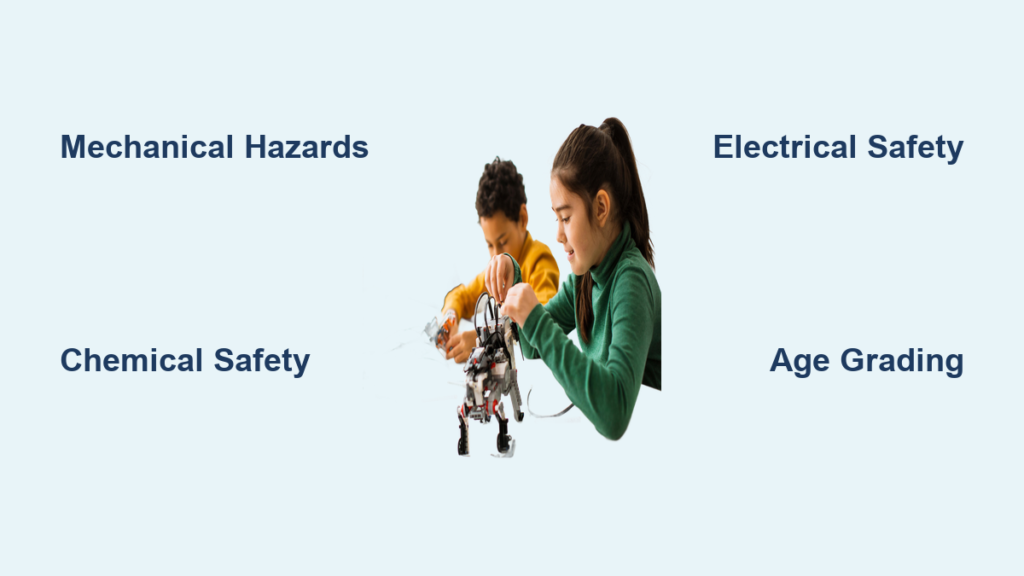
Every year, millions of toys enter global markets, each one promising joy and learning for children. But behind every safe, durable toy is a rigorous process called toy quality testing that ensures compliance with strict safety standards. Without this testing, children face risks from choking hazards, toxic chemicals, electrical faults, and structural failures. Manufacturers who skip this critical step risk recalls, legal penalties, and damaged reputations.
This guide covers everything you need to know about toy quality testing: the global standards that govern it, the specific tests performed, how certification works, and what emerging trends mean for the industry.
Global Toy Safety Standards and Regulations
The international toy safety framework rests on the ISO 8124 series, which countries adopt or adapt for their own regulations. These standards address physical, chemical, and functional risks across all toy categories.
ISO 8124 Series Overview
The ISO 8124 series forms the backbone of international toy safety testing. Key parts include ISO 8124-1 for mechanical and physical hazards, ISO 8124-2 for flammability, and ISO 8124-3 which sets limits on heavy metal migration from accessible toy components. The series also covers phthalate detection, age grading guidance, and experimental sets. These standards are regularly updated to address new materials, technologies, and emerging risks like microplastics and nanomaterials.
Regional Regulatory Frameworks
Major markets enforce their own regulations that manufacturers must meet. The U.S. requires CPSIA compliance with third-party testing and a Children’s Product Certificate. The EU follows the Toy Safety Directive with stricter chemical limits and the upcoming Digital Product Passport requirement by 2030. India mandates BIS certification under IS 9873, while Australia follows AS/NZS ISO 8124. China enforces GB 6675 for mechanical safety and GB 19865 for electrical toys.
Mechanical and Physical Hazard Testing Procedures

Mechanical testing simulates how children actually play with toys to uncover hidden dangers before products reach store shelves.
Small Parts and Choking Hazard Checks
The small parts cylinder test uses a device measuring 1.25 inches in diameter and 2.25 inches deep. Any component that fits entirely inside is prohibited in toys for children under 3 years. During use-and-abuse testing, toys are dropped, twisted, pulled, and compressed to simulate real-world stress. After abuse, detached parts are re-evaluated since many failures occur only after structural fatigue.
Sharp Points and Use-and-Abuse Protocols
Sharp points are assessed per 16 CFR §1500.48, and sharp edges per §1500.49. Toys for children under 8 must not develop hazardous features during normal or abusive play. Functional hazards like scissors in craft kits are allowed but require clear labeling. Use-and-abuse testing includes impact tests from 30-100 cm heights, torque tests on protruding parts, tension tests up to 90 N force, and compression tests applying 50 kg pressure.
Magnet and Projectile Safety Limits
Loose magnets that fit in the small parts cylinder must have a flux index below 50. Stronger magnets are permitted in educational toys for children 8 and older if properly labeled. Projectile toys must not exceed 0.08 joules of kinetic energy and cannot launch improvised projectiles. Toy guns require orange tips to prevent misidentification as real firearms.
Chemical Safety Testing Methods for Toys
Chemical testing ensures toys do not expose children to toxic substances during mouthing, chewing, or skin contact.
Heavy Metal Migration Testing
Standards like ISO 8124-3, EN 71-3, and ASTM F963 set strict limits for soluble levels of antimony, arsenic, barium, cadmium, chromium, lead, mercury, and selenium. Testing simulates stomach acid conditions with pH ranging from 1.5 to 7.5, measuring how much of each element migrates from the toy surface over time. Soluble limits vary by material type, with metallic small parts having tighter cadmium restrictions.
Phthalates and Restricted Substance Screening
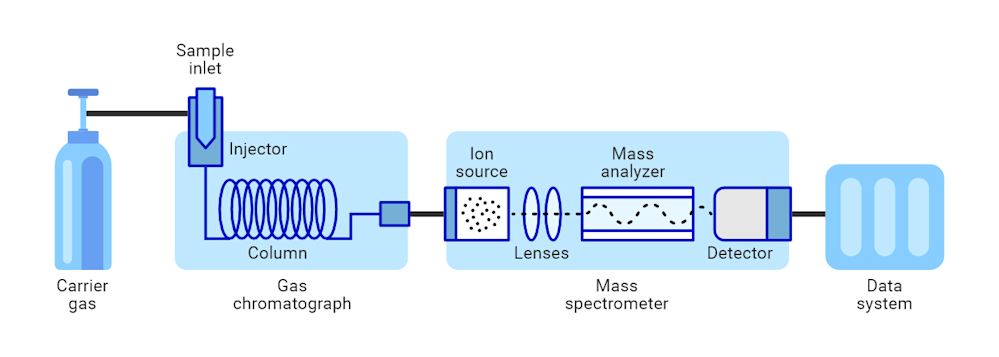
Phthalates used to soften PVC are restricted at 0.1% in toys. DEHP, DBP, and BBP are banned in all toys, while DINP, DIBP, and DNOP are limited in mouthable toys. Detection requires gas chromatography-mass spectrometry which separates and identifies compounds at trace levels. Beyond phthalates, labs screen for azo dyes, formaldehyde, PAHs, N-nitrosamines, and BPA to ensure comprehensive chemical safety.
Electrical and Battery Safety Checks
Battery-operated and mains-powered toys must meet electrical safety standards to prevent shock, overheating, and fire hazards.
IEC 62115 Compliance for Electric Toys
Electric toys must comply with IEC 62115, EN 62115, or 16 CFR Part 1505, covering electric shock prevention, overheating protection, insulation integrity, and wiring standards. Toys with rechargeable batteries require child-resistant compartments with screw closures and carry warnings to keep batteries away from children.
Sound and Laser Safety Limits
Sound-producing toys must not exceed 85 dB(A) at 50 centimeters for ear-level use, with handheld toys limited to 115 dB(C) peak sound pressure. Laser and LED toys must comply with IEC 60825, allowing only Class 1 lasers that remain safe under all conditions, including after damage from use-and-abuse testing.
EMC and Radio Compliance
Wireless-enabled smart toys with Bluetooth or Wi-Fi must meet the EMC Directive to prevent electromagnetic interference and the Radio Equipment Directive for safe radio frequency emissions. Cybersecurity testing is now part of the assessment for toys collecting voice or location data.
Age Grading and Labeling Requirements
Proper age grading ensures toys are matched to children’s developmental capabilities and risk exposure levels.
ISO 8124-6 Age Assessment Guidelines
Age grading considers cognitive and motor development, common play behaviors, and risk exposure like mouthing or climbing. A toy rated for 12-month-olds must eliminate small parts entirely since children this age cannot be expected to avoid choking hazards. Labels must include minimum age recommendations, choking hazard symbols for small parts, battery safety warnings, care instructions, and manufacturer contact information.
Tracking and Certification Marks
The U.S. requires tracking labels on each unit showing date and location of manufacture. The EU requires the CE mark signifying conformity with all applicable directives. These markings prove compliance and are essential for distribution through retailers and e-commerce platforms.
Product-Specific Testing Requirements

Different toy categories face unique risks requiring targeted testing approaches.
Plush and Stuffed Toys
Plush toys require seam strength testing to prevent stuffing leakage, small parts checks for button detachment, flammability testing on fabrics and padding, and chemical migration testing on dyes and stuffing materials.
Ride-On and Activity Toys
Ride-on toys undergo load testing up to 1.5 times rated weight, stability tests under lateral force, and wheel and axle durability assessments. Some ride-ons may be classified as ATVs under 16 CFR Part 1420 requiring additional compliance.
Smart and Electronic Toys
Beyond electrical safety, smart toys require cybersecurity testing for data encryption, software update capability verification, and privacy policy transparency. Bluetooth-enabled toys must undergo RED and EMC assessments. These toys also need COPPA or GDPR-K compliance depending on the target market.
Certification and Compliance Documentation
Proper documentation proves regulatory compliance and enables market access.
Children’s Product Certificate Requirements
The CPC required under CPSIA for U.S. market access must include product identification, applicable regulations like 16 CFR Part 1250, test results from CPSC-accepted labs, dates of testing and production, and contact information for the responsible party. Distributors and retailers must receive the CPC before sale.
Digital Product Passport (EU)
Starting August 1, 2030, all toys sold in the EU must have a Digital Product Passport containing CE marking details, test reports, material composition, and safety warnings. Accessible via QR code or NFC tag, the DPP enhances traceability and consumer trust while enabling real-time safety updates.
Top Testing Labs and Service Providers
Accredited laboratories provide toy quality testing services globally.
Leading Accredited Testing Facilities
QIMA offers Amazon Fast-Track and CPC preparation with global reach. TÜV Rheinland provides DPP readiness and Excellent Play Value certification. Hohenstein specializes in OEKO-TEX testing, hygiene, and UV protection. AM Testing Inc. is CPSC-recognized with fast U.S. turnaround. Sigma Test and Research Centre is NABL-accredited for IS 9873 compliance in India. GICG supports multi-market access with CE and CPC documentation.
When selecting a lab, verify accreditation from CPSC, NABL, or ILAC, confirm geographic coverage matches your target markets, check turnaround times, and ensure digital reporting capabilities.
Toy Testing Process Step-by-Step

A structured workflow ensures efficient compliance achievement.
Compliance Path Overview
The testing process begins with pre-testing consultation to determine applicable standards based on toy type, age group, and target market. Sample submission typically requires 3-5 representative units. Laboratory testing then conducts mechanical, chemical, electrical, and age-grading evaluations. Analysis produces detailed reports identifying pass and fail outcomes. Certification and documentation prepare CPC, GCC, or DPP materials. If needed, corrective actions address failed components through redesign or retesting. Ongoing compliance monitoring conducts periodic audits and batch testing.
Business Benefits of Quality Testing
Investing in toy quality testing delivers measurable returns beyond regulatory compliance.
Risk Mitigation and Market Access
Proactive testing reduces product liability lawsuits, customs rejections, and e-commerce delistings from platforms like Amazon and Walmart. A single recall can cost over $10 million and permanently damage brand reputation. Compliance opens doors to major retailers and international markets with strict import rules. Certifications like OEKO-TEX or TÜV support premium pricing and marketing claims.
Emerging Trends in Toy Safety
The industry continues evolving with new technologies and sustainability demands.
Digital Transformation and Sustainability
The Digital Product Passport enables real-time safety updates, recycling guidance, and consumer engagement via QR codes. Manufacturers should begin structuring digital compliance data now. Regulation (EU) 2023/2055 restricts microplastic release during toy use, affecting material selection and design to reduce abrasion-prone surfaces. Recycled plastics must meet the same safety standards as virgin materials with additional contaminant screening.
Smart Toys and Cybersecurity
As IoT integration grows, future standards will likely mandate secure boot processes, regular software updates, and clear privacy notices. Artificial intelligence is being used for predictive risk modeling, helping identify failure points before physical testing. Manufacturers must stay ahead of these evolving requirements to remain competitive.
Frequently Asked Questions About Toy Quality Testing
What is toy quality testing and why is it necessary?
Toy quality testing is a systematic evaluation process that ensures toys meet strict safety standards for mechanical, chemical, electrical, and age-appropriate hazards. It is necessary because children interact with toys unpredictably, and testing simulates real-world behaviors like dropping, chewing, and disassembling to uncover hidden dangers before products reach store shelves.
Which international standards govern toy safety testing?
The primary international standards include the ISO 8124 series, which covers mechanical hazards, flammability, chemical migration, and age grading. Regional standards like ASTM F963 in the U.S. and EN 71 in Europe align with ISO 8124 but have specific requirements. Countries like India follow IS 9873, while China enforces GB 6675.
What is the difference between CPC and GCC certification?
A Children’s Product Certificate (CPC) is required under CPSIA for all children’s products intended for children 12 and under, requiring third-party testing by a CPSC-accepted lab. A General Certificate of Conformance (GCC) is used for non-children’s products or general goods and allows self-certification based on manufacturer testing.
How long does the toy testing process typically take?
The toy testing process typically takes 2-4 weeks from sample submission to final report, depending on the complexity of the toy and the tests required. Pre-testing consultation and corrective action periods can extend the timeline. Many labs offer expedited services for additional fees.
What happens if a toy fails testing?
If a toy fails testing, the laboratory provides detailed reports identifying specific failures. Manufacturers must then implement corrective actions, which may include redesigning components,更换 materials, or modifying construction. After addressing the issues, the toy undergoes retesting to verify compliance before proceeding to certification.
Key Takeaways for Toy Quality Testing Compliance
Toy quality testing is not optional but a legal requirement for market access in major economies worldwide. The process covers mechanical hazards, chemical safety, electrical performance, age-appropriate design, and proper labeling. Manufacturers must understand the specific standards for their target markets, whether U.S. CPSIA, EU Toy Safety Directive, India’s BIS requirements, or other regional regulations. Working with accredited testing laboratories ensures valid certification documentation like the CPC or EU Digital Product Passport. As standards evolve to address smart toys, cybersecurity, and sustainability, staying ahead of compliance requirements protects children, brands, and business success.