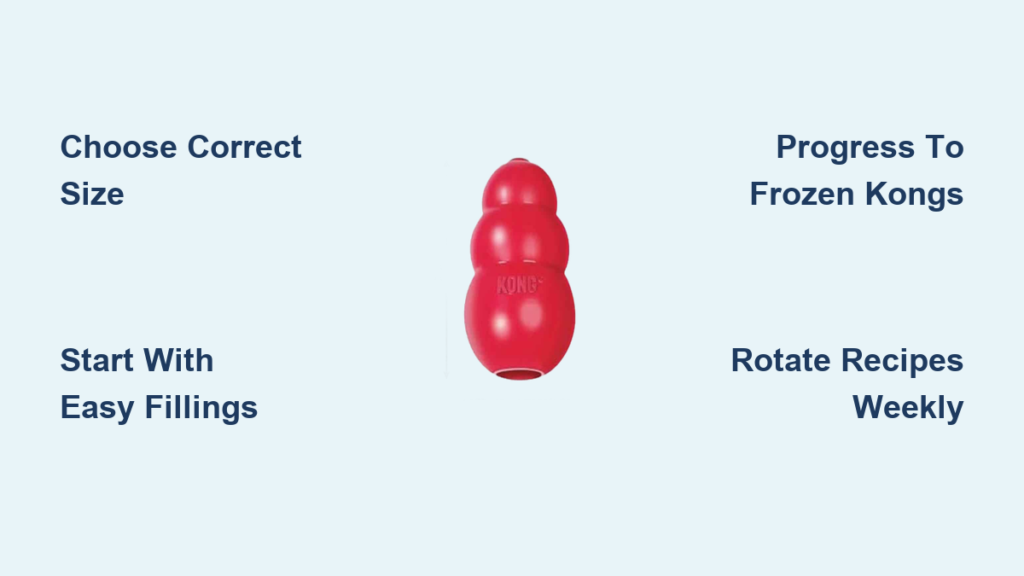
If your dog ignores their Kong or empties it in seconds, you are not alone. The Kong toy is one of the most effective dog enrichment tools available, but only when used correctly. This guide reveals how to introduce the Kong properly, stuff it for maximum challenge, and integrate it into daily routines. You will learn exactly how to turn a simple rubber toy into a long-lasting, brain-boosting activity your dog loves.
Mastering the Kong takes your dog from a two-minute kibble dump to a 45-minute frozen puzzle. This article covers sizing, introduction techniques, progressive difficulty levels, pro stuffing recipes, behavioral applications, and safety guidelines. Every step is backed by expert protocols and real user data.
Choose the Right Kong Size for Your Dog
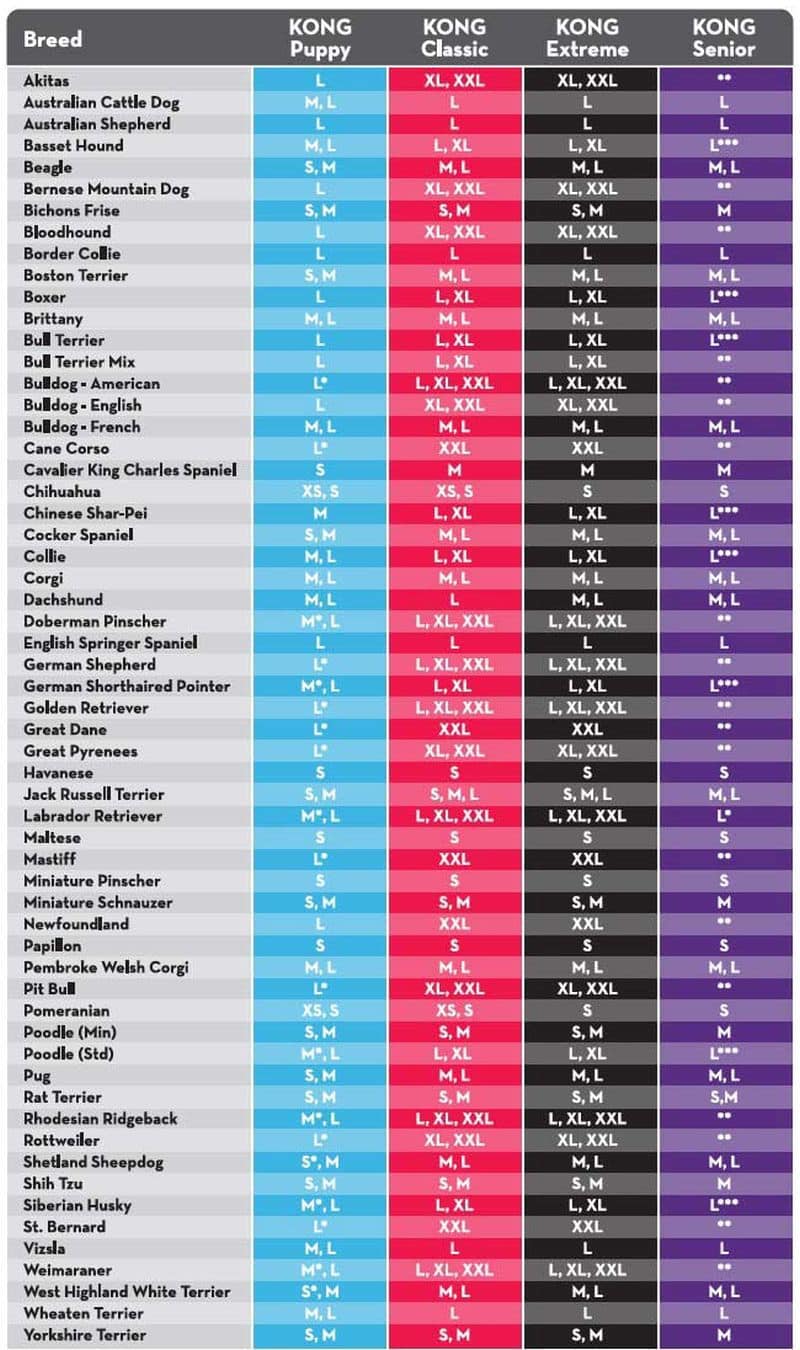
A Kong that is too small defeats the purpose. It empties too fast and can become a choking hazard. The toy should be too big to fit entirely in your dog is mouth. If they can close their jaws around it completely, it is too small.
Match Size to Breed and Jaw Strength
Use this quick reference to select the correct Kong size:
- Small (Red/Black): Chihuahuas, Pomeranians, Shih Tzus
- Medium (Blue): Beagles, Cocker Spaniels, Bulldogs
- Large (Pink/Blue): Labradors, German Shepherds, Golden Retrievers
- X-Large (Gray): Mastiffs, Great Danes, Saint Bernards
Pro Tip: If your dog is between sizes or a power chewer, size up. A large Kong lasts longer and holds more food, increasing engagement.
Use Color Codes to Match Chew Strength
Kong is color system signals rubber durability and life stage suitability.
- Red: Standard durability for adult dogs with moderate chewing
- Black: Extreme rubber for aggressive chewers like Pit Bulls and Rottweilers
- Blue/Pink: Soft rubber for puppies, gentle on developing teeth
- Purple: Extra-soft formula for seniors with dental issues
Fact: Black Kongs endure over 500 minutes of chewing in lab tests. If your dog destroys rubber toys fast, start with black.
Introduce the Kong Step by Step
Dogs do not instinctively know how to extract food from a Kong. Begin with loose, sticky rewards they can lick out in seconds. This builds positive associations and teaches cause-and-effect.
Start with Easy, Lickable Fillings
Use these dog-safe fillings for first introductions:
- Xylitol-free peanut butter
- Cream cheese
- Canned pumpkin (unsweetened)
- Wet dog food
- Mashed banana
Smear a thin layer inside the Kong. Let your dog watch you do it. Sight and smell build curiosity and interest.
Encourage First Interaction
Hold the Kong near your dog and say, “Look what I have got!” in an excited tone. Roll it gently so a treat falls out. This teaches: move the toy, get food.
Let them explore with their nose, paw, toss, or mouth it. Do not help them get the food out. They must learn cause-and-effect on their own.
Seal the Ends to Increase Challenge
Once your dog licks the Kong confidently, plug both ends with peanut butter, cream cheese, or wet dog food. This forces them to work longer. Watch closely during first uses to ensure they do not chew off rubber pieces.
Progress Through Difficulty Levels

Success with the Kong depends on gradual progression. Skipping levels leads to frustration and disengagement. Follow this tiered approach that matches your dog is current ability.
Level 1: Loose Kibble for Instant Rewards
Fill the Kong completely with dry kibble. Place it on the floor. Food should fall out with a shake. This builds confidence and teaches the toy is purpose. Use for two to three sessions before advancing.
Visual Cue: If your dog walks away after one toss, it is too hard. Go back to looser stuffing.
Level 2: Sticky Coating to Extend Engagement
Coat the inner walls with peanut butter or wet food. Add kibble on top. Now licking is required to release food. This stage teaches persistence and new techniques like rolling or pawing.
Level 3: Packed Mixtures for Problem Solving
Use a spoon or knife to tightly pack kibble into a sticky base like peanut butter and wet food. Layer ingredients to create resistance. Dogs must toss, bounce, or chew to extract food.
Common Mistake: Overpacking too soon. If your dog gives up, reduce density or add more moisture.
Level 4: Frozen Kongs for Long-Lasting Play
Once your dog masters packed Kongs, freeze them. Full freezing turns a five-minute toy into a 30 to 60 minute activity.
How to Freeze a Kong
- Stuff completely with a sticky mixture
- Seal both ends with peanut butter or cream cheese
- Freeze two to four hours, or overnight for maximum hardness
- Add a dollop of peanut butter on top before serving
Best For: Hot days, hyperactive dogs, or when you need quiet time.
Stuff Kongs Like a Pro
A layered Kong keeps dogs engaged longer by combining textures and scents. The variety of stuffing options allows customization based on nutrition, preference, and challenge level.
Layer Fillings for Maximum Challenge
A well-layered Kong creates a multi-sensory puzzle.
- Bottom (narrow end): Strong-smelling paste like liver paste or sardines
- Middle: Crunchy bits like freeze-dried liver or jerky
- Main Fill: Soft binder like broth-soaked kibble or cottage cheese
- Top: Visible treat like a carrot stick or cheese cube
Pro Tip: Plug the top with ravioli or tortellini to prevent quick dumping.
Use Binding Agents for Harder Kongs
Make stuffing harder to extract with these mixers:
- Greek yogurt: Freezes solid and supports gut health
- Low-fat melted cheese: Cools into a firm matrix
- Gelatin plus broth: Creates a jellied core when chilled
Try Proven Kong Recipes
All recipes below should be frozen unless noted.
Quick Favorites
- Peanut Butter Glue: Layer kibble and cooled melted peanut butter. Freeze.
- Kibble-Sicle: Peanut butter at bottom, kibble, chicken broth, repeat. Top with PB. Freeze.
- Banana Yogurt: Mashed banana plus plain yogurt. Freeze.
High-Value Meals
- Cheesy Elvis: Banana plus peanut butter plus cheese. Blend, fill, freeze.
- Doggie Omlet: Scrambled egg, beef, yogurt, cheese, mashed potatoes. Freeze.
- Mutt and Cheese: Melted Velveeta, cooked noodles, pour in, freeze.
For Puppies
- Expansion Kong: Fill two-thirds with kibble. Pour warm water into a mug until submerged. Wait 10 to 15 minutes. Kibble expands to fill Kong solidly. Cool before serving.
- Soft and Chewy: Mashed banana plus yogurt plus wet food. No freezing needed.
Top User Picks: Peanut butter, banana, yogurt, and chicken broth mixtures win for taste and longevity.
Use Kongs for Behavior and Feeding
The Kong is a behavioral tool with strategic deployment benefits. It can replace one full meal daily while slowing eating and reducing bloat risk.
Replace One Meal Daily
A stuffed Kong can replace a full meal. Just adjust your feeding plan.
- If the Kong contains three-quarters to one cup of kibble plus extras, skip or reduce the bowl-fed portion.
- Example: Dog eats one cup kibble per day. Feed Kong with full meal. Offer one-quarter cup later or skip dinner.
Benefit: Slows eating, reduces bloat risk, and turns feeding into play.
Deploy at Key Times
Use the Kong strategically to manage behavior:
- Before Zoom calls: Give a frozen Kong for 30 plus minutes of quiet
- When leaving home: Offer upon departure to reduce separation anxiety
- During TV time: Keeps dog occupied without barking
- For hyper puppies: Channels energy into focused chewing
Data Insight: Over 90% of owners report reduced anxiety when using Kongs during alone time.
Prevent Common Mistakes
Even experienced Kong users make these errors. Avoid them to maximize success.
| Mistake | Fix |
|---|---|
| Kong empties too fast | Upgrade size or pack tighter |
| Dog loses interest quickly | Start easier. Add instant-reward topping |
| Using xylitol peanut butter | Never use xylitol. It is deadly |
| Overfeeding | Subtract Kong calories from regular meals |
| Skipping supervision | Watch first five to ten minutes every time |
| Repeating the same stuffing | Rotate recipes weekly to prevent boredom |
Critical Warning: Always check for cracks, especially in black or red Kongs. Discard if rubber is chewed thin or has sharp edges.
Clean and Maintain the Kong
Proper cleaning extends the life of your Kong and prevents bacteria buildup.
Wash After Every Use
Use warm, soapy water and a bottle brush to scrub inside. Soak in warm water for 10 to 15 minutes if food is stuck. Dishwasher-safe on top rack only. Air dry completely before storing or refreezing.
Deep Clean: Soak in one-to-one vinegar-water solution once a week to kill bacteria.
Store Pre-Stuffed Kongs
Pre-fill and freeze Kongs in labeled zip-top bags. They last up to one month in the freezer. Keep three to five in rotation to maintain novelty.
Time-Saver: Pre-freeze broth cubes or peanut butter drops in ice trays for quick toppings.
Use Kongs Across Life Stages
The Kong adapts to your dog is age and physical condition. Adjust size, rubber type, and filling difficulty accordingly.
Puppies: Soothe Teething with Cold Kongs
Use blue or pink puppy Kongs with soft, frozen fillings like banana plus yogurt, wet food plus water, or mashed sweet potato. Freezing numbs sore gums and redirects chewing from furniture.
Adult Dogs: Maximize Mental Challenge
Use black or red Kongs with complex stuffings like layered jerky plus kibble plus broth, frozen peanut butter plus cheese plus dried liver, or multi-layer freezing. Ideal for high-energy breeds like Border Collies or Huskies.
Seniors: Gentle Stimulation for Aging Dogs
Use purple Kongs with soft, easy-to-lick fillings like scrambled eggs, cottage cheese, canned dog food, or mashed carrots plus wet food. Minimal or no freezing if teeth are sensitive.
Safety First: Critical Guidelines
Never compromise on safety when using the Kong. Follow these guidelines to protect your dog.
Never Use Toxic Ingredients
Avoid these dangerous foods:
- Xylitol in some peanut butters causes liver failure
- Chocolate, grapes, onions, garlic, macadamia nuts
- Salty, sugary, or spiced human foods
Always read labels. Use only dog-safe, low-sodium ingredients.
Supervise and Inspect Regularly
Watch during first use and any new stuffing. Check for cracks, tears, or worn rubber. Replace if the toy shows damage. Even small pieces can be choking hazards.
Kong offers a one-time replacement for manufacturer defects, not chewing damage.
Consult Your Vet for Health Concerns
Skip rich fillings like cheese and peanut butter if your dog has pancreatitis, food allergies, diabetes, or dental disease. Start new ingredients slowly to avoid stomach upset.
Maximize Long-Term Success
The Kong becomes more effective with consistent use and strategic progression. Make it a cornerstone of your dog is daily well-being.
Rotate Stuffings Weekly
Dogs get bored. Keep engagement high with variety. One week use peanut butter plus banana. Next week use chicken broth plus kibble. Then use yogurt plus blueberries plus liver.
Pro Tip: Involve kids in safe stuffing. It teaches responsibility and strengthens pet bonds.
Turn Kong Time into a Daily Ritual
Make it predictable. Morning: frozen Kong upon waking. After walk: soft-stuffed Kong for wind-down. Before bed: calming recipe like cottage cheese plus pumpkin. Consistency turns the Kong into a rewarded, anticipated event.
Upgrade Challenges Over Time
Once your dog finishes a frozen Kong in under 15 minutes, add Kong crackers deep inside. Hide a meatball in the center. Use multi-layer freezing. Track progress. Dogs often go from two-minute kibble dumps to 45-minute frozen puzzles in four to six weeks.
Frequently Asked Questions About Kong Toys
How do I get my dog interested in the Kong?
Start with a thin layer of xylitol-free peanut butter smeared on the outside and inside. Let your dog watch you fill it. Use an excited voice. Roll it so a treat falls out. This teaches that the Kong means rewards.
Which Kong size is best for a Labrador?
A large Kong (pink or blue) works best for Labradors. They have strong jaws and need plenty of stuffing capacity. If your Lab is a power chewer, consider sizing up to X-large or using the black extreme rubber version.
Can I use the Kong every day?
Yes, you can use the Kong daily. Just account for the calories in the stuffing. Subtract those calories from your dog is regular meals to prevent weight gain. Rotating different recipes weekly keeps it interesting.
How long does a frozen Kong last?
A properly frozen Kong lasts 30 to 60 minutes, depending on your dog is skill level and the filling complexity. Dogs with more experience extract food faster. Beginners may take 10 to 20 minutes.
Is frozen Kong safe for puppy teeth?
Yes, but use puppy-specific Kongs (blue or pink) with soft rubber. Avoid hard frozen treats if your puppy has sensitive teeth. Stick to soft fillings like banana yogurt or wet food.
What if my dog chews through the Kong?
Stop use immediately and inspect the toy for pieces. If your dog swallowed rubber, contact your vet. For aggressive chewers, switch to the black Kong Extreme rubber designed for power chewers.
Key Takeaways for Using Kong Toys Effectively
The Kong is more than a toy. It is a behavioral tool, feeding aid, and mental gym in one. When introduced correctly and used with progressive challenges, it becomes a cornerstone of your dog is daily well-being.
Start with the right size and color. Choose a Kong too large to fit entirely in your dog is mouth. Match rubber durability to your dog is chewing style. Introduce with easy lickable fillings before progressing to packed and frozen versions.
Rotate recipes weekly to prevent boredom. Account for Kong calories in your dog is daily intake. Supervise first uses. Clean after every session. Replace damaged toys immediately.
With these steps, you will transform a rubber cone into a lifetime habit of joy, focus, and calm. Your dog gains mental stimulation. You gain peaceful quiet time. It is a win-win for every dog owner.