
Magnetic blocks turn ordinary playtime into a launchpad for math, science, and storytelling. With strong magnets and translucent tiles, children as young as 8 months can begin exploring cause and effect, while older kids tackle engineering challenges like marble mazes and ball runs. The right magnetic blocks ideas unlock skills that last well beyond the playroom.
This guide walks you through age-specific activities, creative build themes, and expert strategies for getting the most out of every tile. You’ll find practical prompts, sensory play setups, and tips for turning cleanup into learning. Whether you’re a parent, teacher, or caregiver, these ideas will help you transform simple shapes into powerful tools for growth.
Build Core Developmental Skills Through Magnetic Block Play
Strengthen Math and Geometry Foundations
Magnetic tiles turn abstract math into something children can hold, stack, and reshape. Kids naturally explore symmetry, fractions, and spatial relationships as they connect pieces into patterns and structures.
- Shape filling: Tape a triangle or hexagon outline on a tray and challenge kids to fill it exactly with tiles.
- Pattern chains: Build repeating color sequences like red-blue-red-blue or shape chains like triangle-square-triangle.
- Symmetry mirrors: Draw a line down paper and ask kids to mirror their tile design on both sides.
These activities build early geometry skills and logical thinking without a single worksheet.
Discover the Science of Magnetism
Kids become little physicists the moment they feel two tiles snap together or push apart. This hands-on exploration builds curiosity and sharpens reasoning skills.
- Pole testing: Let children flip tiles and feel the push and pull to understand magnetic poles.
- Magnetic or not?: Offer a tray of mixed items (paperclip, spoon, eraser) and let kids test which stick to tiles.
- Field visualization: Place a tile under paper and sprinkle iron filings to reveal invisible magnetic lines (supervise closely).
Ask open questions like “Why won’t these two sides connect?” to spark deeper thinking.
Boost Fine Motor Skills and Coordination
The small size and magnetic resistance of tiles demand precise finger control. Every connection strengthens hand muscles needed for writing, buttoning, and self-care.
- Tile pinching: Use thumb and forefinger to grip edges, building pincer grasp.
- Vertical builds: Attach tiles to a fridge for upright play that improves wrist alignment.
- Posting games: Build an open-top cube and let toddlers drop smaller tiles or pom-poms inside.
These movements prepare little hands for school tasks and daily independence.
Age-Appropriate Magnetic Block Activities for Every Stage
Infant Play: Sensory Discovery for Babies 8 to 18 Months
Even the youngest learners benefit from magnetic blocks when supervised with safe, larger tiles.
Pull and Push Exploration
Sit with your 8 to 12 month old and slowly connect two square tiles. Let them feel the satisfying snap, then gently pull them apart. Repeat this action to introduce magnetism and cause-and-effect thinking.
Pro tip: Choose bright, high-contrast colors to stimulate visual tracking and focus.
Simple Posting Box
Build a four-sided cube with an open top. Hand your toddler small magnetic pieces or soft objects to drop inside. This satisfies their natural urge to fill and empty containers while building hand-eye coordination.
Watch for: Focus duration. This activity often calms and centers young children.
Toddler Builds: Moving From 2D to 3D
Two and three year olds begin transitioning from flat designs to standing structures that blend creativity with motor control.
Color Sorting Towers
Create open-top boxes in different colors. Give your child tongs and loose parts like pom-poms or beads to sort into matching boxes. Then stack the boxes into a rainbow tower.
- Develops: Color recognition, pincer grip, categorization
- Extension: Name colors in a second language during sorting
2D Silhouettes and Faces
Let toddlers build simple shapes like boats, fish, or smiling faces using flat tiles. A triangle can become a nose, circles become eyes, and a rectangle becomes a mouth. This sparks abstract thinking and emotional recognition.
First 3D Structures
Guide your toddler to build a cube or pyramid by standing tiles up and connecting edges. Start with a simple house using four walls and a triangular roof. Add a door or window with contrasting tiles for extra flair. Success here builds confidence and spatial awareness.
Preschooler Projects: Engineering and Imagination
At age 4 and up, children are ready for complex builds that blend STEM challenges with storytelling.
Build a Marble Maze
Create a maze on a flat surface or vertical board using walls made of square tiles.
- Outline a border.
- Add curved or zigzag walls.
- Guide a marble through by tilting the board.
Add dead ends or a “start” and “finish” line for extra challenge. This improves visual tracking, planning, and patience.
Design a Ball Run on the Fridge
Use the refrigerator for a gravity-powered ball run that keeps kids engaged while you cook.
- Attach ramp tiles at angles to create drops.
- Build tunnels with 3D shapes.
- Place a basket at the bottom for self-resetting play.
Older kids can add loops or a pulley system with string for advanced play.
Construct a Domino Chain
Stand tiles on their narrow edge to create a falling chain reaction.
- Start with a straight line, then progress to spirals or rainbow color sequences.
- Space tiles evenly; too close or too far affects the fall.
This teaches physics, precision, and delayed gratification.
Warning: Keep fingers clear. Magnets can pinch when tiles snap together.
Creative Build Themes That Inspire Imagination
Castles and Forts for Budding Architects
Castles spark imagination while teaching architectural thinking.
Beginner Castle
- Base: Square tower with four walls.
- Turrets: Add triangles on corners.
- Gate: Leave one side open or use a rectangle as a door.
Advanced Castle
- Multi-room layout: Build an inner courtyard, throne room, and dungeon.
- Tall towers: Stack cubes vertically and cap with cones.
- Drawbridge: Use a hinged tile on one edge.
Add toy knights or dragons for storytelling sessions.
Houses and Villages for Role-Play
These builds support social development and narrative thinking.
- Doll homes: Build rooms for peg people or animal figures.
- Village layout: Create multiple houses, a school, and a park.
- Interior design: Use small tiles as furniture, with squares for beds and rectangles for tables.
Encourage kids to narrate who lives where and what happens in each room.
Barns and Animal Pens for Sorting Skills
Teach sorting and real-world concepts through farmyard play.
- Farmyard build: Make pens of different sizes.
- Animal sorting: Group by size, type, or color.
- Learning link: Discuss which animals need more space, like comparing a cow to a chicken.
This blends biology with spatial reasoning.
Vehicles That Move Imaginations
Rocket Ships for Future Explorers
Create a futuristic launchpad build that lights up imagination.
- Core: Wrap tiles around a tin can or bottle for the body.
- Fins: Attach triangles at the base.
- Thrusters: Use red or orange tiles at the bottom.
- Bonus: Shine a light behind it on a light table for a glowing “blast-off” effect.
Trains and Tracks for Transportation Play
Build a full transit system that ferries peg people or animals.
- Train cars: Make connected cubes with wheels using black circles or bottle caps.
- Tracks: Lay rectangle tiles in a line.
- Stations and bridges: Add a platform and arches for engineering fun.
Pair with storybooks like The Little Engine That Could for added literacy.
Boats and Submarines for Water Play
From simple sailboats to detailed submarines, these builds float imagination.
- Sailboat: Triangle sail on a rectangular base.
- Pirate ship: Add a flag and curved sides.
- Submarine: Use a dome or half-circle tile for the top.
Float them in a water bin (with supervision) to explore buoyancy concepts.
Creatures and Characters Kids Love to Build
Build a Robot
Robots blend creativity with structural thinking.
- Template method: Draw a robot on paper and let kids copy it with tiles.
- 3D robot: Use cubes for the body and arms, triangles for spikes or antennas.
- Magnetic advantage: Strong holds keep arms from falling during builds.
Add googly eyes for extra personality.
Dinosaur Models
From flat stegosaurus silhouettes to 3D T-Rex builds, dinosaurs spark learning.
- 2D start: Trace a dinosaur outline and fill with tiles.
- 3D challenge: Balance angles for legs and tail.
- Learning link: Talk about dinosaur sizes, habitats, and features.
Use books to inspire accurate designs and vocabulary.
Creative Animals
Think beyond the obvious. Build a duck with a beak or a housefly with wings.
- Shape mapping: What tile looks like a beak? A tail?
- Problem-solving: How do you make it stand?
This encourages lateral thinking and humor.
Sensory and Light-Based Play Ideas
Light Table Creations
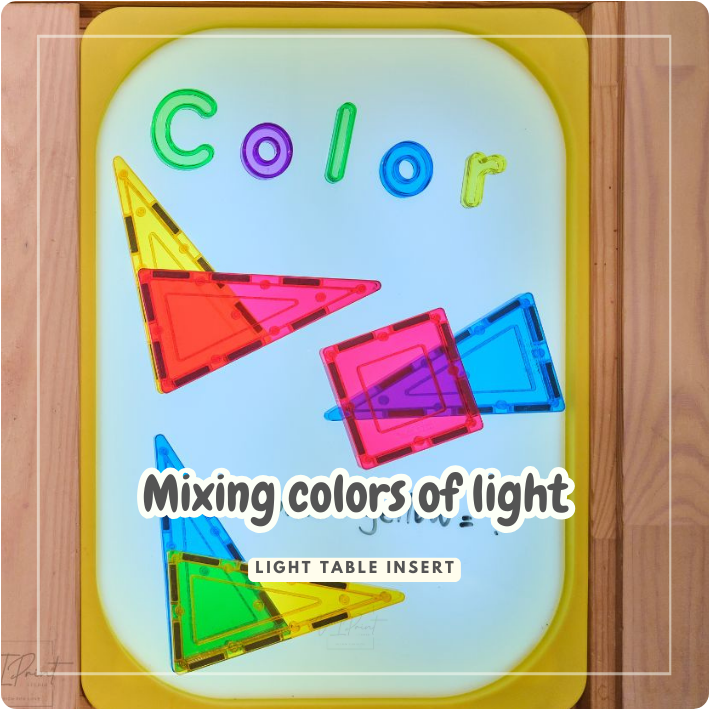
Place tiles on a light table or under a lamp for magical effects.
- Color mixing: Overlap red and blue tiles to see purple.
- Shadow play: Observe how shapes cast patterns on walls.
- Add water beads: Place translucent beads under tiles for a calming sensory experience.
This setup is perfect for sensory regulation and quiet play.
Rainbow Sorting Challenge
Build color-specific boxes and sort loose parts into them.
- Materials: Pom-poms, buttons, or beads.
- Tools: Tongs or tweezers to boost fine motor skills.
- Goal: Match the color of each object to its box.
Turn it into a timed game or cooperative challenge.
Shape Outlines and Tracing
Tape shapes on a table or fridge for geometry practice.
- Task: Fill the shape exactly with tiles.
- Skills: Spatial reasoning and shape identification.
- Variation: Use irregular shapes for older kids.
This builds early geometry and problem-solving skills.
Use Vertical and Integrated Play Spaces
Fridge Building Station
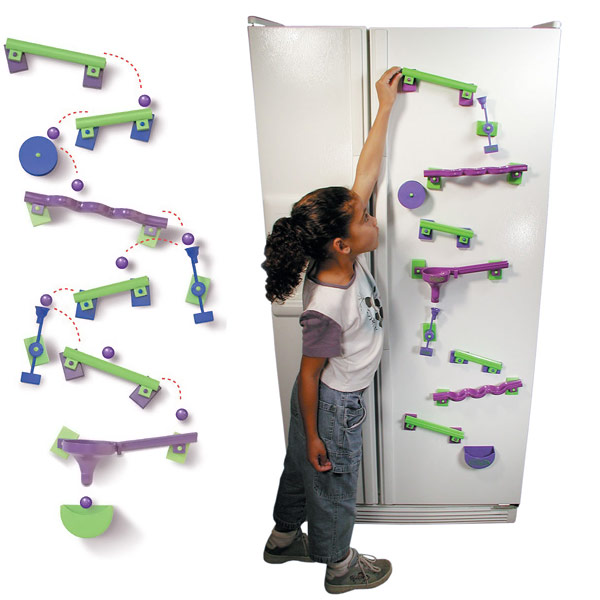
Turn the refrigerator into a play zone that frees floor space.
- Benefits: Allows cooking-time engagement and eye-level building.
- Projects: Ball runs, dominoes, and mazes work great vertically.
- Safety: Supervise closely. Avoid placing tiles near handles or vents.
Kids love building at standing height while parents prepare meals.
Combine with Loose Parts
Enhance storytelling by mixing materials.
- Examples:
- Wooden peg dolls in magnetic houses.
- Roads made with tiles for toy cars.
- Fences around animal figurines.
- Beds for Goldilocks characters.
This promotes adaptability and narrative depth.
Story-Inspired Builds
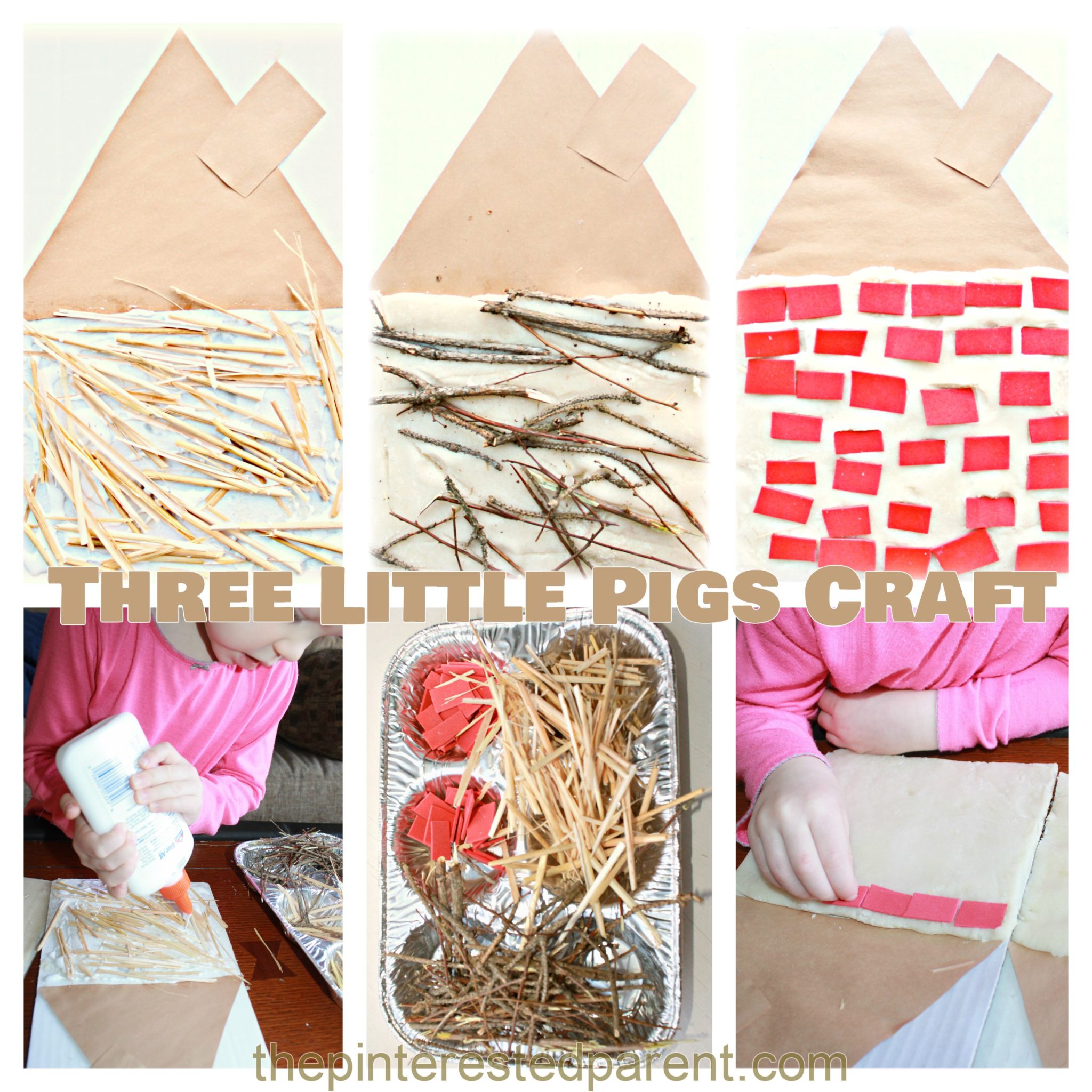
Link favorite books to construction play.
- After reading The Three Little Pigs: Build straw, stick, and brick houses.
- Following Princess and the Pea: Make a tall bed with many layers.
- Post-Aliens Love Underpants: Construct a spaceship and underpants trail.
These builds reinforce comprehension and creative retelling.
Maximize Learning With Smart Adult Strategies
Scaffold the Difficulty
Match builds to your child’s stage for steady growth.
- Infants: Focus on connection and separation.
- Toddlers: Introduce 2D shapes and simple 3D boxes.
- Preschoolers: Challenge with symmetry, mazes, and storytelling.
Gradual progression builds confidence and skill.
Ask Open-Ended Questions
Instead of directing, prompt thinking.
- “What could this shape become?”
- “How can we make this tower stronger?”
- “Can you build a home for this toy?”
These questions foster independence and problem-solving.
Encourage the Sorting Ritual
Let kids sort by color or shape before and after play.
- Why it matters: Cleanup is math in action.
- Skills: Categorization, patterning, and organization.
Respect the process. It is part of the learning.
Rotate and Refresh Materials
Keep interest high by introducing new combinations.
- Rotate loose parts: Swap in beads one day, animals the next.
- Themed bins: Create a “space” bin with rockets and stars.
- Challenge cards: Print simple build prompts like “Make a bridge.”
This prevents boredom and sparks fresh magnetic blocks ideas.
Frequently Asked Questions About Magnetic Blocks Ideas
What age should kids start playing with magnetic blocks?
Most magnetic blocks are recommended for children 8 months and older. At this stage, infants can safely explore the snap-and-pull action under supervision. Toddlers benefit from simple posting and sorting activities, while preschoolers can tackle complex 3D builds and engineering challenges.
Are magnetic blocks safe for toddlers?
Magnetic blocks are generally safe for toddlers when used as directed. Look for tiles with encased magnets to prevent pinching or swallowing. Always supervise play, especially with younger children, and check tiles regularly for cracks in the plastic casing.
How do magnetic blocks help with learning?
Magnetic blocks support math, science, fine motor, and language development. Children learn geometry and symmetry through building, explore physics through magnetism, and strengthen hand muscles for writing. They also boost problem-solving, patience, and storytelling skills through open-ended play.
What can I build with magnetic blocks besides towers?
The possibilities go far beyond towers. Kids can build marble mazes, ball runs, domino chains, castles, robots, dinosaurs, vehicles, and entire villages. Combining tiles with loose parts like peg dolls or pom-poms expands the play even further.
How do I store magnetic blocks easily?
Many families use baskets or bins for storage. Turning cleanup into a sorting activity by color or shape makes tidying part of the learning. Some families also use metal storage tins or magnetic boards to keep tiles visible and accessible.
Can magnetic blocks be used on vertical surfaces?
Yes. Magnetic blocks stick to refrigerators, magnetic whiteboards, and other metal surfaces. Vertical play is great for ball runs, mazes, and building at eye level. It also keeps kids engaged in the kitchen while parents cook.
Key Takeaways for Unlocking Magnetic Blocks Ideas
Magnetic blocks grow with your child, offering endless magnetic blocks ideas from first grasp to advanced engineering. Start with simple attraction and repulsion for infants, move into 2D sorting and basic 3D shapes for toddlers, then challenge preschoolers with mazes, castles, and story-inspired builds. Combine tiles with loose parts, use vertical surfaces, and turn cleanup into a sorting ritual to maximize learning.
Try one new build this week and watch imagination and intelligence click into place.