If you have ever picked up a favorite hand toy or collectible only to find it tacky and sticky to the touch, you are not alone. Sticky hand toys, especially resin or sofubi figures, are a common frustration among collectors. The stickiness usually stems from improper curing of a glossy clear coat, particularly when acrylic varnish is thinned with water or applied too thickly. Over time, these finishes never fully harden, leaving behind a frustratingly sticky surface that attracts dust and lint like a magnet. The good news? With the right approach, you can safely clean and restore your toy without damaging its details. This guide walks you through proven cleaning steps and effective fixes, so you can bring your sticky hand toy back to life.
Prepare the Sticky Toy for Cleaning

Before any cleaning begins, proper preparation is essential to avoid further damage. A sticky surface is highly sensitive to contaminants, so starting clean makes all the difference.
Wash Your Hands First
Always wash your hands thoroughly before handling the toy. Oils, lotions, and dirt from your skin can transfer onto the sticky surface, worsening adhesion issues and attracting more debris during the process.
Disassemble If Necessary
Some hand toys, especially sofubi vinyl figures, are made of multiple glued pieces. If joints or seams appear loose or need access for cleaning, use a heat gun on low to gently soften the glue. Rotate the toy slowly to avoid warping. Never force parts apart. If unsure, leave it assembled to prevent breakage.
Inspect for Debris
Hold the toy under bright light and check for embedded dust, fibers, or grime. Sticky surfaces trap particles quickly, so knowing what is there helps gauge cleaning intensity. Avoid touching sticky areas more than necessary.
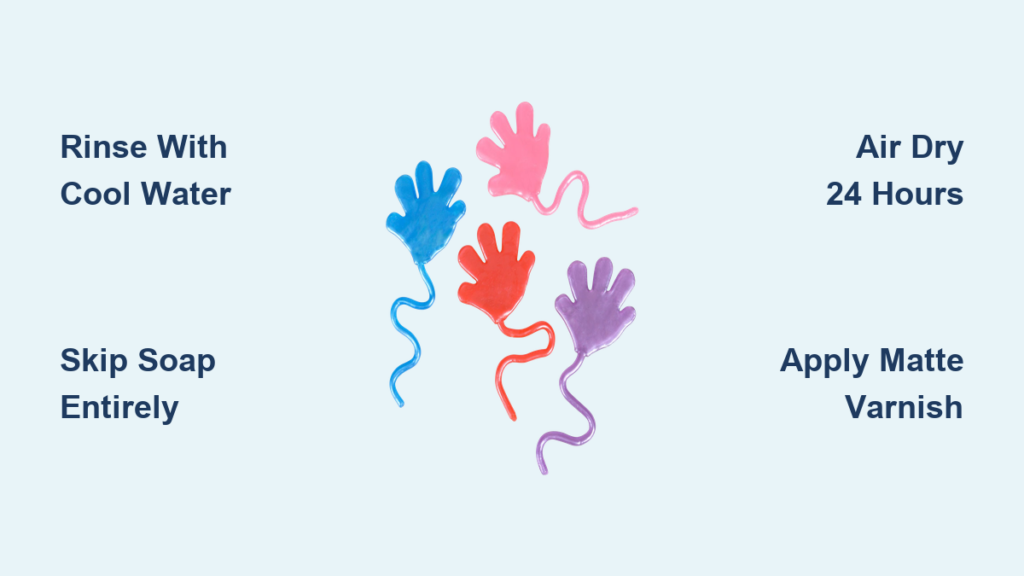
Rinse With Cool Water Only
The first actual cleaning step is simple but crucial: a water rinse. This removes loose contaminants without risking chemical reactions or film buildup.
Use Lukewarm or Cool Running Water
Hold the toy under a gentle stream of cool or lukewarm water in the sink. Hot water may warp softer plastics or worsen stickiness by softening the uncured varnish further.
Gently Rub With Fingers
Use your fingertips to lightly rub sticky areas. This helps dislodge surface dust without abrasion. Do not use sponges, brushes, or scrubbing pads. They can scratch or leave fibers behind.
Skip the Soap
Avoid dish soap, even mild kinds. While it seems logical, soap can make stickiness worse. Tests show that after soap and water cleaning, many toys feel tackier. Soap residues interact poorly with uncured varnish, creating a film that amplifies the sticky sensation.
Dry Without Touching
How you dry the toy matters just as much as how you clean it. Improper drying introduces lint, smudges, or recontamination.
Shake Off Excess Water
Gently shake the toy to remove droplets. Keep it upright to prevent water from pooling in crevices or joints.
Never Towel Dry
Do not use towels, cloths, or paper towels. The sticky surface will grab lint and fibers instantly, embedding them permanently. This creates a rough, dirty finish once sealed under any repair coat.
Use Cool Air From a Hairdryer
Set a hairdryer to cool air only, no heat. Hold it 6 to 8 inches away and blow over all surfaces for 3 to 5 minutes to speed evaporation. Heat can soften the varnish and increase tackiness.
Air Dry for 24 Hours
Place the toy on a chopstick, dowel, or drying rack so sticky sides do not touch any surface. Let it sit undisturbed in a clean, low dust environment for 24 hours. A closet, display case, or covered box works well. The longer it dries, the better the adhesion for any fix you apply later.
Apply Matte Varnish (Beginner Fix)

Once fully dry, the most accessible way to eliminate stickiness is applying a new, properly cured topcoat. For those without airbrush gear, brush on matte varnish is a reliable solution.
Test on a Hidden Area First
Try the varnish on a small, inconspicuous spot, like the bottom or back. Wait 24 hours to check for adhesion, clouding, or texture changes. This prevents full surface damage if the product reacts poorly.
Use Liquitex Matte Varnish
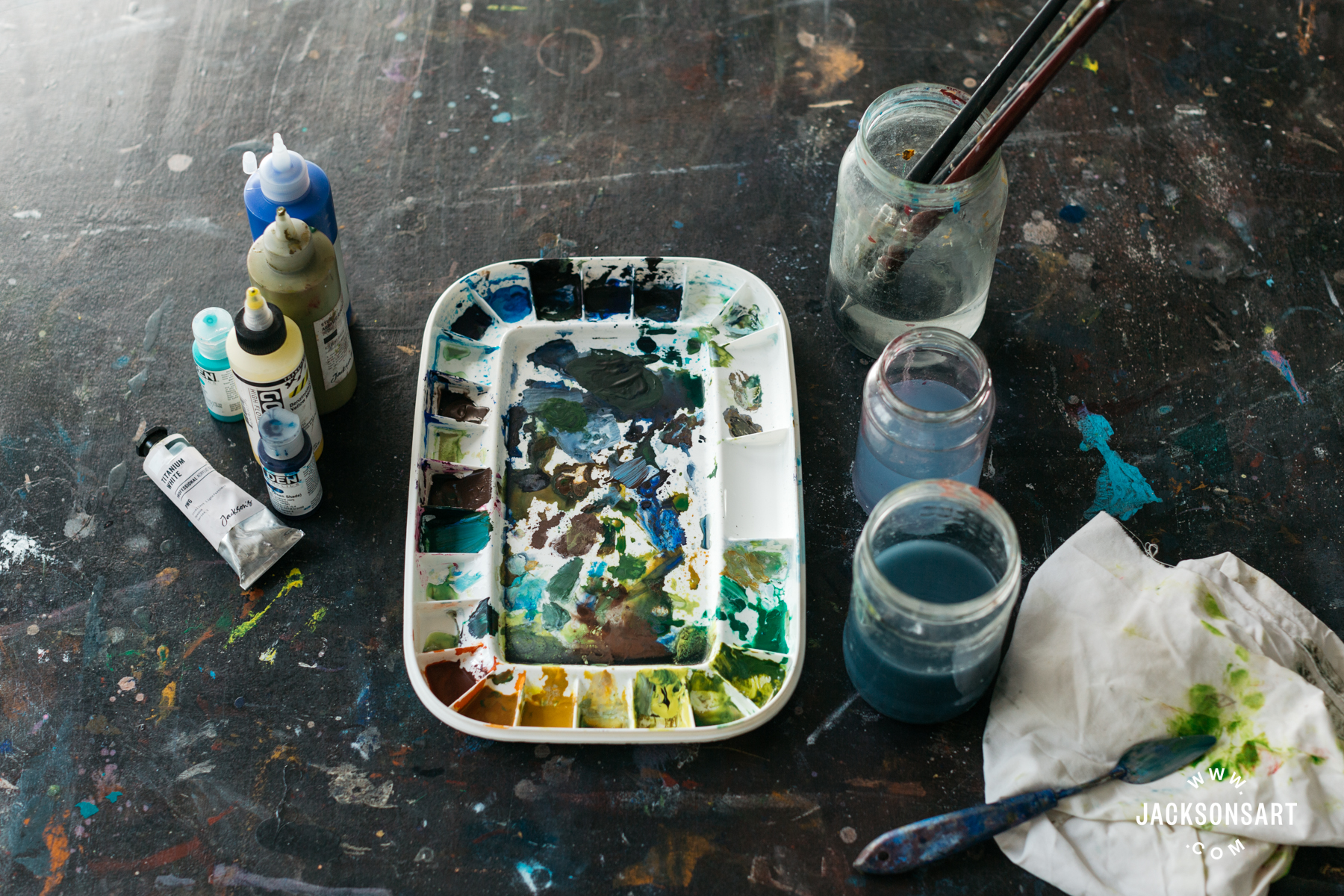
Liquitex Matte Varnish, water based, has been tested and proven effective. It adheres well over sticky acrylic layers and cures to a stable, non tacky finish. Pour a small amount into a palette to avoid contaminating the whole bottle.
Apply Thin, Even Coats
Use a clean, soft brush appropriate for the toy is size. Load lightly and apply a thin, even coat. Work in small sections to prevent pooling. Thick layers will not cure properly and may stay sticky.
Pro Tip: Blow Away Bubbles
As you paint, gently blow on the surface to pop any bubbles that form. This keeps the finish smooth and professional looking.
Let Cure for 24 Hours
Place the toy back on a drying stand and let it cure in a dust free space for at least 24 hours. Do not handle or move it during this time.
Check for Missed Spots
After drying, inspect under bright light. Shiny areas mean the original sticky varnish is still exposed. Use a smaller brush to touch up those spots with another thin coat. Repeat drying.
Clean the Brush Immediately
Rinse the brush thoroughly with water right after use. Acrylic varnish hardens quickly and can ruin brushes if left to dry.
Expect a Satin Finish
This method changes the look. Glossy finishes become satin or semi matte, falling between shiny and flat. While not invisible, the new surface is non sticky and protected.
Airbrush With Ninja Clear (Advanced Fix)
For collectors who want to preserve the original glossy look, airbrushing with Mad Ape Ninja Clear is the top performing solution. It has been used successfully on multiple sticky toys.
Set Up a Safe Workspace
Work in a well ventilated area. Wear a respirator and nitrile gloves. Spray fumes can be harmful, and skin contact should be avoided.
Thin the Clear Coat Heavily
Mad Ape Ninja Clear must be significantly thinned before spraying. Follow manufacturer guidelines and test spray on a sample surface. The ideal consistency produces a fine mist, not droplets or runs.
Test Spray on a Hidden Spot
Apply a light coat to a small area. Let it dry 24 hours. Check for clarity, adhesion, and texture. If it blurs details or lifts the original coat, stop.
Spray in Light, Even Passes
Hold the airbrush 6 to 8 inches from the toy. Use smooth, overlapping strokes. Apply one or two ultra light coats. More is not better. Heavy coats can sag or stay tacky.
Cure Overnight
Let the toy sit undisturbed for 24 hours in a clean space. Avoid touching or displaying it sooner. Full chemical curing takes time.
Evaluate and Reapply if Needed
After curing, touch the surface. It should feel smooth and dry. If slight tackiness remains, repeat with another light coat. Most toys only need one or two.
Alternative: V Color Clear (Unproven)
V Color Clear is sometimes used as a substitute, but it has not been tested in controlled conditions. Use only if Ninja Clear is not available, and always test first.
Why Other Cleaning Methods Fail
Not all cleaning attempts work. Some even make things worse. Here is what does not help and why.
Soap and Water Makes It Stickier
Despite seeming logical, mild dish soap plus water leaves a residue that amplifies stickiness. Tests confirm toys feel more tacky after washing. The soap removes surface dust but exposes the true sticky layer underneath, making it feel worse.
Sunlight Does Not Cure the Varnish
Leaving a toy in direct sunlight for hours does not fix stickiness. While UV light helps cure some resins, improperly thinned or applied varnishes will not harden this way. After 1.5 hours in full sun, zero improvement was observed.
Avoid These Critical Mistakes
Even with the right steps, small errors can ruin the restoration. Watch for these common pitfalls.
Skipping the Drying Step
Going straight from rinse to coating traps moisture and dust. The new varnish seals in contaminants, creating a permanently flawed finish.
Using the Wrong Varnish
Never use gloss varnish to fix sticky gloss. It will likely stay sticky. Matte or satin finishes are more effective at breaking the tacky surface tension.
Applying Thick Coats
Whether brushing or spraying, thick layers do not cure. They stay soft, attract dust, and may yellow over time. Always apply thin, even coats.
Rushing the Cure Time
Waiting 24 hours between coats is not optional. Rushing leads to poor adhesion, bubbling, and re stickiness. Patience ensures success.
Tips for Long Term Success
Maximize your results and protect your restored toy with these expert tips.
Work in a Dust Free Zone
Clean your workspace thoroughly. Wipe down surfaces and close windows to reduce airborne particles. A sticky toy is a dust magnet, especially when wet.
Use Thin Coats Only
Multiple thin layers beat one thick one every time. They dry faster, cure better, and look smoother.
Label Your Test Toys
If experimenting, label each toy with the method used. This helps track what works and prevents confusion during long term observation.
Monitor for Long Term Issues
Even fixed toys may develop problems later. Yellowing over years, varnish crystallization, and odor development have been reported. These are signs of underlying chemical instability, not your fix failing.
Best Permanent Fix: Strip and Re Clear
The only guaranteed long term solution is to completely strip the old varnish and reapply a fresh, properly cured coat. However, this is risky for detailed or painted toys and often impractical. For most collectors, the matte varnish or airbrush method offers the best balance of safety, effectiveness, and accessibility.
Frequently Asked Questions About Cleaning a Sticky Hand Toy
What causes a hand toy to become sticky?
Hand toys become sticky when the clear coat finish does not cure properly. This happens most often when varnish is thinned with water against manufacturer recommendations or applied too thickly. Poor ventilation, low UV exposure, and inadequate curing conditions also contribute to the problem.
Can I use soap to clean a sticky hand toy?
No. Soap and water actually makes stickiness worse. Testing shows toys feel more tacky after soap cleaning because soap residues interact with uncured varnish, creating a film that amplifies the sticky sensation.
How long does it take for a sticky hand toy to dry after cleaning?
The toy should air dry for a full 24 hours after cleaning. Using a hairdryer on cool setting can speed surface drying, but the toy still needs at least 24 hours in a clean, low dust environment before applying any varnish or coating.
Will matte varnish change the look of my hand toy?
Yes. Applying matte varnish changes a glossy finish to satin or semi matte. The texture becomes less shiny but remains smooth. This is the trade off for eliminating stickiness using a beginner friendly method.
Can sunlight cure a sticky hand toy?
No. Direct sunlight exposure does not cure improperly applied varnish. Tests show no improvement after 1.5 hours in full sun followed by additional indirect light. UV exposure alone cannot fix varnish that was thinned incorrectly or applied too thickly.
Key Takeaways for Fixing a Sticky Hand Toy
Cleaning a sticky hand toy does not require expensive tools. It requires patience and the right technique. Start by rinsing with cool water only, skipping soap entirely. Dry thoroughly using cool air and a full 24 hour air drying period on a stand. Apply a thin coat of Liquitex Matte Varnish for a beginner approach, or use Mad Ape Ninja Clear with an airbrush for advanced users who want to preserve the glossy look. Avoid common mistakes like using soap, applying thick coats, or skipping the drying time. While not a perfect permanent fix, this tested process restores functionality and appearance. With proper care, your hand toy can stay smooth, clean, and ready to handle for years to come.