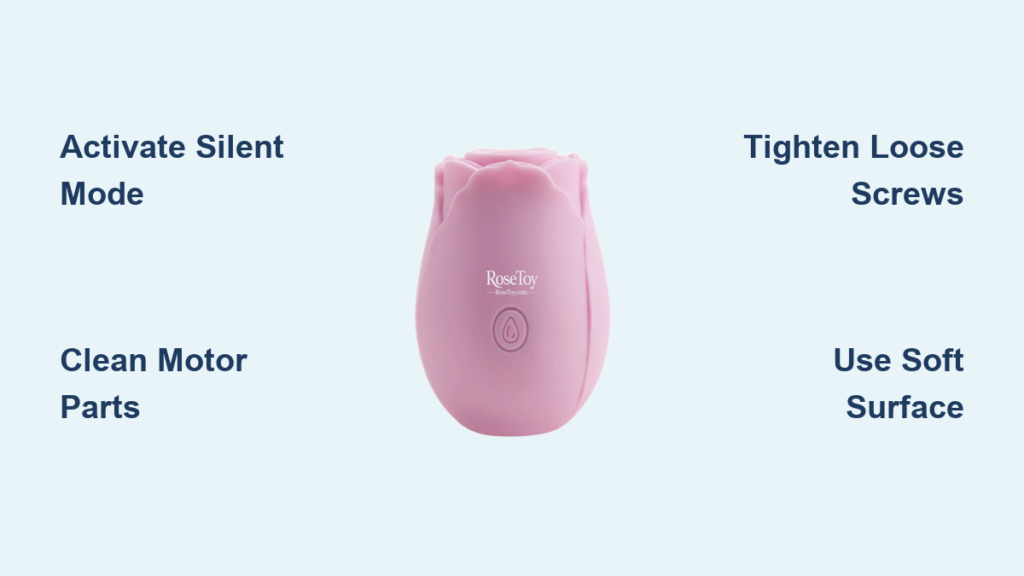
If your Rose Toy has become louder than expected, you likely want to reduce the noise for more discreet use in shared spaces or quiet environments. Many users discover that their device produces more sound than advertised, especially after prolonged use or when certain features aren’t properly activated. The good news is that most noise issues are fixable through proper setup, maintenance, and usage adjustments. This guide covers verified techniques to make your Rose Toy quieter, from activating Silent Mode correctly to cleaning internal components and optimizing your usage environment.
You’ll learn how to test sound levels objectively, identify mechanical issues, and apply targeted solutions that restore near-silent operation. We’ll also discuss when to contact support or consider upgrading to a quieter alternative.
Activate Silent Mode Correctly
The first and most effective step to quiet your Rose Toy is ensuring Silent Mode is properly activated. This built-in feature reduces motor intensity and sound output across all settings.
Confirm Silent Mode Engagement
Press and hold the power button for three seconds. Watch for a single LED flash, which confirms Silent Mode is on. If no flash occurs, the mode may not be engaging due to a software glitch or low battery.
A double flash or continuous blinking indicates a different mode, such as pairing or reset, not Silent Mode.
Test Sound Output in Silent Mode
Even with Silent Mode active, perceived noise can vary. Use objective testing to verify performance. Use a decibel meter app like Decibel X or NIOSH SLM on your smartphone. Place the phone ten centimeters from the toy’s tip in a quiet room with less than 30 dB ambient noise. Cycle through all intensity levels and record readings.
Acceptable noise levels include 45 dB or lower at the lowest setting (comparable to a quiet library hum) and 55 dB or lower at the highest setting (comparable to refrigerator hum). If readings exceed these values, Silent Mode may not be functioning or another issue is amplifying noise.
Troubleshoot Failed Activation
If Silent Mode doesn’t engage, charge the device fully since low battery can prevent mode activation. Restart the toy by holding the power button for ten seconds. Check the user manual for model-specific instructions or firmware updates.
Some older units may require a factory reset to restore Silent Mode functionality after software drift.
Verify Performance with Decibel Testing
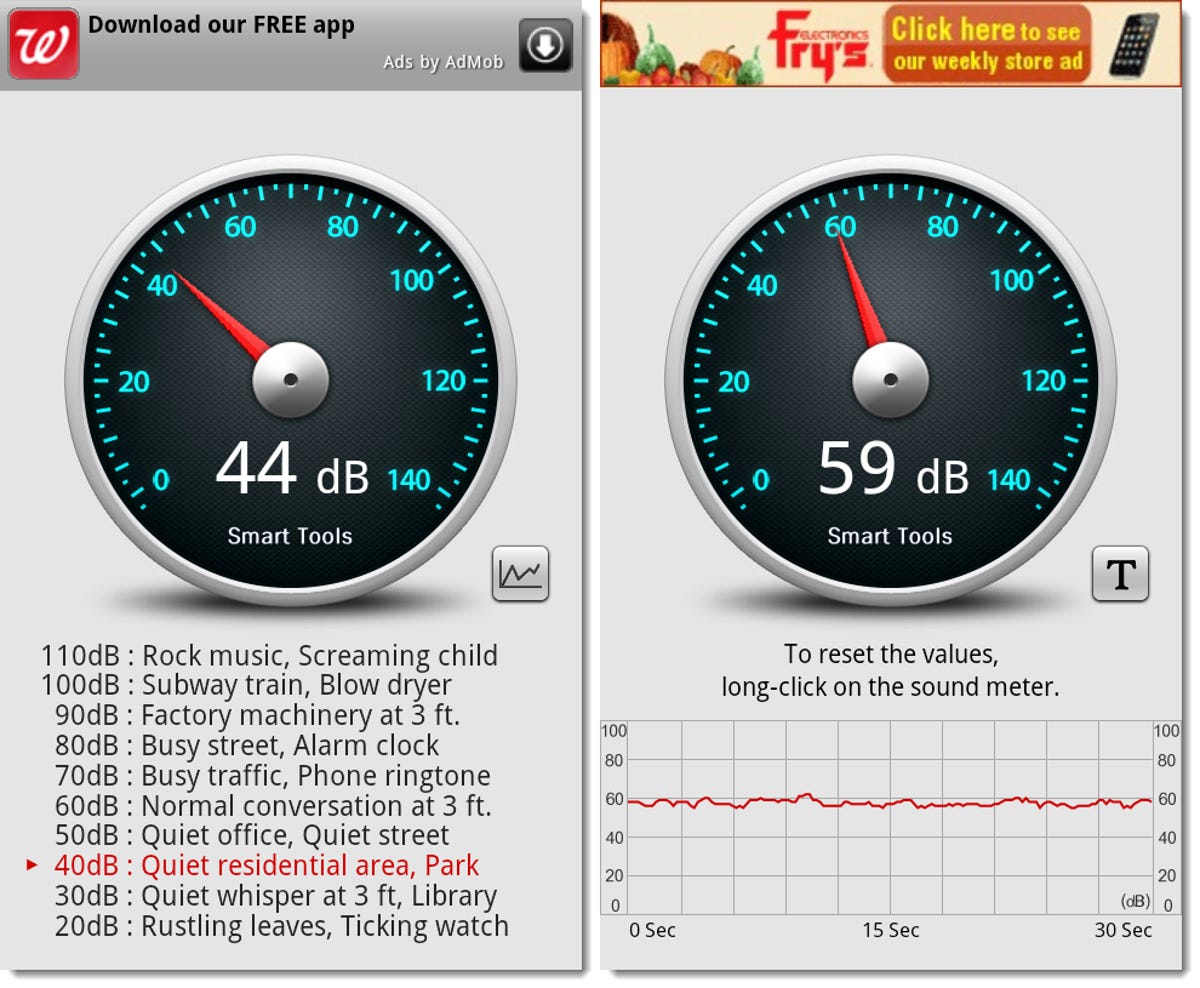
Subjective perception of noise often doesn’t match actual sound levels. Objective measurement ensures you’re solving real problems, not assumptions.
Choose the Right Testing App
Use a calibrated sound meter app for reliable results. NIOSH SLM offers the best accuracy, followed by Sound Meter and Decibel X. Avoid uncalibrated apps since they can misreport by plus or minus 10 dB.
Follow Standardized Testing Conditions
For consistent results, test in a quiet room by closing windows and turning off fans and air conditioning. Keep distance at ten centimeters from the toy’s tip. Position the microphone facing the motor housing. Run the test at each intensity level. On most apps, look for a stable dB reading over five to ten seconds.
Interpret Results Accurately
A reading of 45 dB or lower produces very quiet perception like a whisper, making discreet use possible even in silence. Readings between 46 and 50 dB create a soft hum, which works with background noise. Readings between 51 and 55 dB produce moderate sound comparable to a refrigerator and may be noticeable up close. Readings above 55 dB are loud and likely indicate a defective or dirty unit.
If your Rose Toy exceeds 55 dB at max intensity, proceed to mechanical inspection.
Inspect for Loose or Damaged Parts

Excess noise often stems from mechanical looseness, not motor defects. A rattling or uneven vibration usually means something inside has shifted.
Perform a Rattle Test
Turn off the device. Gently shake it near your ear in a quiet room. Listen for clicking, grinding, or loose part sounds. Any internal noise when the device is off suggests loose screws, detached components, or cracked housing.
Check External Fasteners
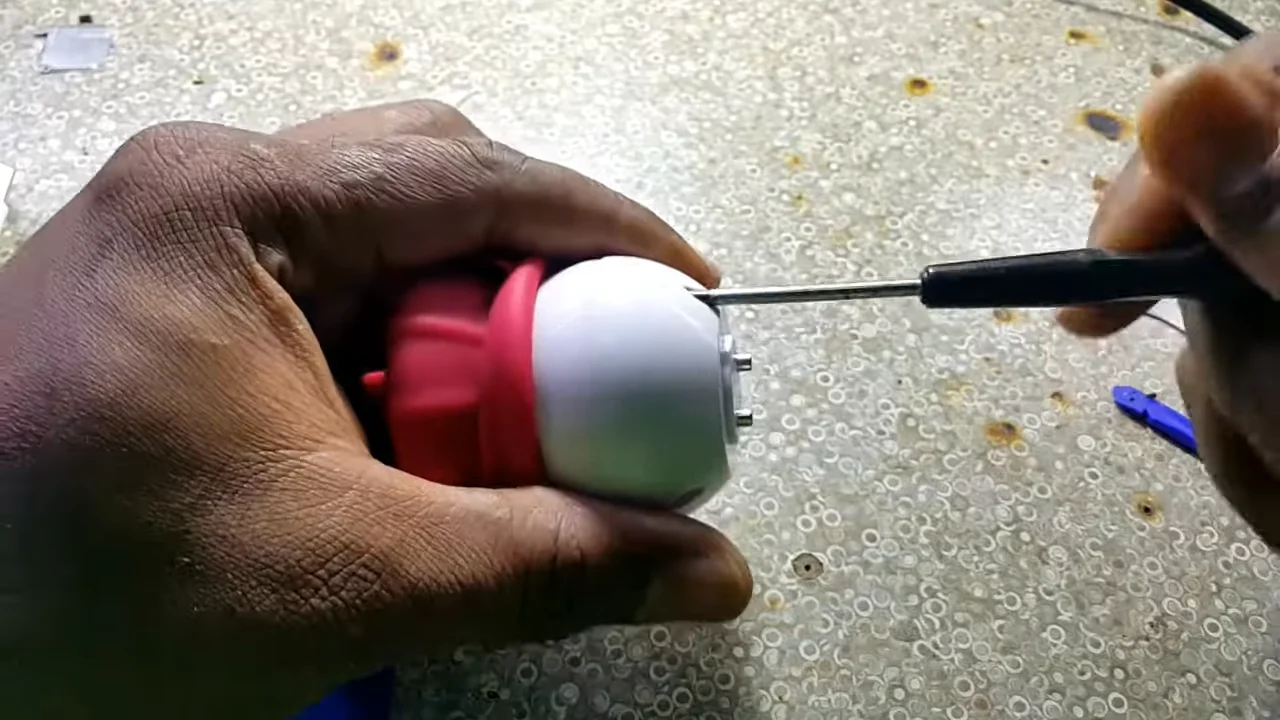
Some Rose Toy models have small screws at the base or charging port. Use a #00 Phillips precision screwdriver to gently tighten them. Do not overtighten since this can strip threads or crack plastic. Focus on the head assembly because if the rosebud wobbles abnormally, internal fasteners may be loose.
Examine Housing Integrity
Look for cracks, warping, or misalignment along seams. Press lightly on both halves of the body. Excessive flexing may indicate internal damage. Even minor drops can misalign motor mounts, increasing vibration noise.
Clean Motor and Internal Components
Dust, lint, and dried lubricant accumulate over time, increasing friction and noise. Cleaning can restore smooth, quiet operation, but only if done safely.
Can You Disassemble the Rose Toy
Check manufacturer guidelines because many models are sealed and not user-serviceable. If disassembly is allowed, use plastic pry tools to avoid scratching or damaging seals. If not, stick to external cleaning and compressed air.
Safe Cleaning Procedure for Non-Disassemblable Units
Power off and unplug the device. Dampen a microfiber cloth with water or toy cleaner. Wipe the exterior, focusing on seams and vents. Use canned air to blow debris from crevices by holding the can upright and using one to two second bursts. Avoid moisture by not tilting the can.
Safe Cleaning Procedure for Serviceable Models
Open the housing carefully. Locate the vibration motor and surrounding cavity. Blow out dust with compressed air. Wipe accessible surfaces with a dry or slightly damp lint-free cloth. Never submerge electronics.
A clogged motor shaft increases resistance, forcing the motor to work harder and louder.
Lubricate Moving Parts Safely
Friction between moving components is a major source of noise. Proper lubrication reduces wear and dampens sound, but only silicone-based lube should be used.
Why Silicone Lube Only
Petroleum-based lubes like Vaseline and baby oil degrade silicone rubber and plastics. Water-based lubes dry out quickly and attract dust. Silicone lube remains stable, non-reactive, and long-lasting. Recommended products include Dow Corning 33, Pjur Med Clean and Care, and Evolved Silicone Lubricant.
Apply Lube Precisely
Use a toothpick or micro-applicator for control. Apply a rice-grain-sized drop to the motor shaft if accessible, the interface between head and actuator, and any sliding or rotating joints. Reassemble and test. Add more only if noise persists.
Over-lubrication traps dust and creates gummy buildup, so less is more.
Recheck After 24 Hours
Allow lubricant to settle since some silicone oils take time to penetrate fully. Retest noise levels the next day for best results.
Diagnose Motor and Internal Damage
Persistent grinding, screeching, or overheating may indicate motor failure, not just dirt or looseness.
Identify Faulty Motor Signs
Grinding or metallic buzzing differs from a smooth hum. Overheating within five minutes of use indicates a problem. Vibration stronger than the setting suggests is a warning sign. Intermittent power or erratic behavior also signals issues. These symptoms often mean the motor’s bearings are worn or the rotor is unbalanced.
Reset or Reprogram If Supported
Some advanced models allow factory reset by holding power for ten or more seconds or firmware updates via USB or app. Check the user manual or manufacturer website for model-specific options.
Contact Customer Support
If your Rose Toy shows signs of defect, act within the warranty period, typically one year. Provide the purchase receipt, description of noise, and a video or audio clip if possible. Possible outcomes include free repair or replacement, referral to an authorized service center, or confirmation of known batch issues.
Many brands honor warranties even without original packaging if you have proof of purchase.
Optimize Usage Environment
Even a perfectly quiet toy can seem loud in the wrong setting. Small changes in position, surface, and timing can dramatically improve discretion.
Use on Soft Surfaces
Hard surfaces like tile, wood, or glass amplify vibrations through resonance. Instead, place the device on a folded towel, pillow, or mattress. Hold it in hand since flesh absorbs vibration better than rigid materials. Avoid resting it on nightstands or bathroom counters.
Users report up to 10 dB reduction simply by switching from tile to fabric.
Manage Intensity Levels
Higher intensities mean more motor speed and more noise. For maximum quietness, use the lowest effective setting. Combine Silent Mode with low intensity for whisper-quiet performance. Avoid prolonged use at max power.
Mask Residual Noise
Even 50 dB can be noticeable in silence. Use ambient sound to your advantage by running a fan, white noise machine, or TV. Play music or audio through headphones. Use the device during a shower or bath if it’s waterproof.
Streaming ASMR or rain sounds at low volume masks mechanical hum effectively.
Upgrade to a Quieter Alternative
If maintenance fails and noise remains above 55 dB, it may be time to upgrade. Some devices are engineered from the ground up for silence.
Top Quiet Alternative: Lelo Sona 2
The Lelo Sona 2 produces less than 50 dB in independent tests. It uses Sonic Wave Pulse technology that’s non-contact with no traditional motor. No moving parts means no friction and ultra-quiet operation. The price ranges from 180 to 220 USD.
Users frequently describe it as near silent, even in quiet bedrooms.
What to Look for in Quiet Toys
When shopping, prioritize published dB ratings, preferably third-party tested. Consider motor type since linear actuators are quieter than magnetic drivers, which are quieter than ERM motors. Look for sound-dampening housing with rubberized coatings and internal insulation. Check verified reviews on Reddit, YouTube sound tests, and retailer sites.
Whisper quiet claims are often exaggerated. Always check independent dB measurements.
Maintain Long-Term Quiet Performance
Prevention beats repair. A few simple habits keep your Rose Toy running smoothly and quietly for years.
Post-Use Routine
Wipe the device with a damp microfiber cloth after each use. Store it in a cool, dry place away from dust. Keep it in its original case or pouch if available.
Monthly Maintenance Checklist
Inspect for loose parts or cracks monthly. Clean the charging port with a dry brush. Test Silent Mode and all intensities. Verify button responsiveness.
Avoid Common Damage Risks
Don’t drop the device since impacts misalign motors. Don’t overcharge since this can degrade battery and affect motor control. Don’t use with incompatible lubes since this causes material breakdown.
Fully charge before first use and avoid letting the battery drain to zero.
Frequently Asked Questions About Making Rose Toy Quieter
Why is my Rose Toy louder than the advertised noise level?
Several factors can cause increased noise, including improper Silent Mode activation, accumulated debris in the motor, loose internal components, worn motor bearings, or using the device at maximum intensity. Dust and lint buildup increases mechanical resistance, forcing the motor to work harder and produce more sound.
Does Silent Mode really reduce noise on the Rose Toy?
Yes, Silent Mode reduces noise significantly when properly activated. It lowers the expected decibel range to 45 to 55 dB, comparable to a quiet conversation or refrigerator hum. However, you must activate it correctly by holding the power button for three seconds and confirming a single LED flash.
Can I take apart my Rose Toy to clean the motor?
Only if your specific model is designed for user maintenance. Many Rose Toy models are sealed and not user-serviceable. Attempting to disassemble sealed models may void your warranty and risk damaging internal components. Stick to external cleaning with a damp cloth and compressed air for sealed units.
What is the quietest intensity setting for minimum noise?
The lowest intensity setting produces the least noise, typically 45 dB or lower when combined with Silent Mode. Using the lowest effective setting with Silent Mode active provides whisper-quiet performance suitable for even silent environments.
How do I know if my Rose Toy motor is damaged?
Signs of motor damage include grinding or metallic buzzing versus a smooth hum, overheating within five minutes of use, vibration amplitude disproportionate to the selected intensity, and intermittent power or erratic behavior. If you notice these symptoms, contact customer support within your warranty period.
What are the best alternatives if my Rose Toy can’t be quieted?
The Lelo Sona 2 is a top recommendation, producing less than 50 dB using Sonic Wave technology instead of a traditional motor. When shopping for quiet alternatives, look for published decibel ratings, linear actuator or magnetic driver motors, and sound-dampening housing design.
Key Takeaways for Making Your Rose Toy Quieter
The Rose Toy is designed for discreet use, with Silent Mode bringing noise to 45 to 55 dB, quiet enough for most environments. By verifying Silent Mode is properly activated using the three-second button press and LED confirmation, you establish the foundation for quiet operation. Cleaning and lubricating carefully with silicone-based products removes debris and reduces friction that causes excess noise. Tightening loose parts and inspecting for damage addresses mechanical issues that amplify sound. Optimizing your usage environment by using soft surfaces and managing intensity levels further reduces perceived noise. If noise persists above 55 dB despite these efforts, contact manufacturer support for warranty repair or consider upgrading to a purpose-built quiet model like the Lelo Sona 2. With proper care and correct usage, your device can remain both powerful and private.