
If you’ve ever flicked a glass sphere across a dirt ring or watched a rainbow swirl trapped inside a tiny orb, you’ve experienced the timeless charm of toy marbles. These small spherical playthings typically range from 0.5 to 3.5 cm in diameter and have evolved from simple clay balls into intricate art pieces, serving as tools for games, symbols in global culture, and prized collectibles. Today, toy marble types span a vast spectrum of materials, designs, and origins, from mass-produced glass rounds to handcrafted pieces worth thousands of dollars.
Whether you’re a nostalgic adult revisiting childhood memories, a competitive player in the British and World Marbles Championship, or an art glass enthusiast, understanding the different toy marble types is essential. This guide breaks down every major category by material, design, origin, and value so you can identify, appreciate, and collect marbles like a pro.
Glass Marbles: The Most Popular Type
Glass dominates the marble world due to its clarity, color brilliance, and versatility in design. From vintage handmade swirls to modern machine-made sets, glass marbles are favored in both play and collecting.
Cat’s Eye Marbles: Colorful Core Designs
Cat’s eye marbles feature a central colored core encased in clear or translucent glass. The effect mimics a feline pupil when light hits just right.
The main subtypes include beachball marbles with three colors arranged in six radiating vanes resembling a vintage beach ball, devil’s eye marbles featuring a red base with a bright yellow center dot, and red devils which use a similar color scheme but with swirling patterns instead of a defined eye. These are often machine-made today, but antique handmade versions fetch high prices.
Crystal (Clearie) Marbles: Transparent Beauty
Also called clearies or puries, crystal marbles are made of solid-colored transparent glass. Variants include deep blue sea with rich cobalt blue, blue moon with pale blue shimmer, green ghost in translucent emerald, and bloody mary in deep red resembling wine. Modern subtypes include princess marbles in tinted pink or lavender and galaxy marbles embedded with tiny flecks to mimic stars. These are prized for their purity and light-refracting qualities.
Swirl and Alley Marbles: Vintage Handmade Art
Alley marbles, short for alabaster, are crafted from glass with wavy ribbon-like patterns. Common pattern names include corkscrew, spiral, snake, ribbon, onyx, bumblebee, and butterfly. Originally made from real marble stone, later versions use patterned glass. Highly collectible handmade versions from Germany pre-1950 command premium prices.
Clay and Ceramic Marbles: The Original Playthings
Before mass production, children played with marbles made from local clay. These humble spheres evolved into one of the most widespread types: the commie, short for common marble.
Commie Marbles: Simple and Affordable
Commie marbles are made from porous clay, glazed and fired. They appear opaque, often in red-brown shades with slight imperfections. Mass-produced in the U.S. in the 1890s, they’re still marketed today as old timey marbles. Still used in casual play, these are low-cost and widely available, though not favored in serious competition.
Subtypes include Bennington marbles made from salt-glazed clay, typically brown or blue with rare green and purple variants, and crock marbles made from earthenware clay, heavier and more durable than standard commies.
Stone and Agate Marbles: Precision for Competitive Play
For competitive players, few marbles match the weight and accuracy of natural stone.
Stone Marbles: The Gold Standard
Stone marbles are made from ground marble, limestone, agate, or other fine-grained stones. Their extremely smooth finish and heavier weight improve control and accuracy in shooting games. Production is limited to a few mills in Europe and India due to high cost, making these the gold standard in tournament play, especially in the UK and Germany.
Agate Marbles: Natural Beauty
Agate marbles are solid slices of agate stone polished into spheres. Each features unique banding patterns, so no two are alike. Primarily collectible due to cost, though occasionally used in high-end games, these are miniature geological masterpieces.
Steel and Plastic Marbles: Modern Alternatives
While traditionalists favor glass or stone, modern materials offer durability and affordability.
Steel Marbles: Heavy and Durable
Steel marbles are simply metal ball bearings, significantly heavier than glass. Known as steely in UK playgrounds, particularly in Leicester, they’re popular in knocking games and mechanical toys like marble runs. Their metallic clink and resilience make them ideal for rugged play.
Plastic Marbles: Safe and Inexpensive
Plastic marbles are made from synthetic polymers like acrylic and polystyrene. Common in children’s toy sets and board games like Chinese Checkers, they’re preferred in schools for safety. Limitations include lighter weight reducing accuracy and being less desirable for serious play or collecting. Despite lower prestige, plastic marbles dominate retail markets due to low cost and bright colors.
Art Marbles: Handcrafted Collector’s Pieces
Beyond play, marbles have entered the art world as collectible glass sculptures.
Art Marbles: From Studio to Showcase
Art marbles emerged from the American art glass movement, created by individual glass artists using torches and kilns. Notable artist Josh Simpson is famous for planetary marbles with embedded galaxies. Typically 50 mm (2 inches), these are known as toe breakers for their size and weight. Sold exclusively to collectors, prices range from $100 to over $10,000. Some pieces include mini landscapes visible under magnification.
Why Collectors Love Art Marbles
Each art marble is one-of-a-kind, with hours of handwork going into every piece. Signed by the artist with certificates of authenticity, rare pieces appreciate over time. Collectors often display them in glass cases like fine jewelry.
Specialty and Large Marbles: Game Variants
Some marbles are defined by size or role in specific games.
Tom Bowler: The Giant Shooter
Tom bowlers are at least twice the diameter of standard marbles, ranging from 35 to 50 mm. Used as a striker in games like Ring Taw, their weight gives players more force when knocking out opponents’ marbles.
Kong and King Kong: Regional Large Marbles
Kong refers to large marbles in UK slang, while King Kong is bigger than a bosser, another term for large playing marbles. These are often used as prized strikers or collectibles. Size implies status, with winning a Kong in a game being a major victory.
Prit and Prit-Kong: White Marbles
Prit is the UK regional term for white marble, while prit-kong refers to a large white marble, rare and valuable. These stand out visually and are often targeted in games.
How Marbles Are Made: Manufacturing Methods

Understanding manufacturing helps identify age, origin, and value.
Handmade Marbles: Crafted with Flame
The glass rod method involves fusing colored glass rods into patterned canes, cutting canes into marble-sized segments, and heating and rounding segments on a marver (flat steel surface). Stone marbles are shaped by grinding and polishing, while clay marbles are rolled, dried, fired, then glazed. Handmade marbles often show slight asymmetry, proof of artisan work.
Machine-Made Marbles: Industrial Production
The screw groove method drops molten glass into a groove between two rotating screws. As the screws rotate, they shape and cool the marble into a sphere. For color application, the base glass batch is colored, additional streams are added for effects like cat’s eye, and expensive colors are layered over cheaper glass to save cost. This method enabled mass production, starting with M.F. Christensen’s 1903 machine.
Top Marble Producers Today

Vacor de Mexico: Global Leader
Founded in 1934, Vacor de Mexico produces over 12 million marbles per day, manufacturing approximately 90% of the world’s playing marbles. The company supplies schools, toy stores, and game manufacturers worldwide with standard 16mm glass marbles in bulk packs.
Marble King: Last U.S. Manufacturer
Located in Paden City, West Virginia, Marble King is the only remaining American-based toy marble maker. The company produces standard glass marbles, specialty sets, and collector editions, representing a symbol of American toy heritage.
How to Value and Collect Marbles
Collectors use a mix of objective and subjective criteria to determine marble worth.
Key Value Factors
Type significantly impacts value, with art marbles commanding the highest prices, followed by handmade glass, rare antiques, and common types. Larger marbles, particularly 50mm toe breakers, are more valuable than standard sizes. Condition is critical, as chips or pits can reduce value by 50% or more. Eye appeal matters, with bright colors and complex patterns increasing desirability. Scarcity drives premiums, especially for rare patterns like corkscrew. Known makers like Christensen, Akro Agate, and Josh Simpson add value. Age matters, with pre-1950 marbles more desirable. Original packaging increases worth significantly.
A mint-condition handmade German swirl from the 1920s can sell for hundreds or even thousands of dollars.
Classic Marble Games Around the World
Marbles aren’t just toys; they’re cultural artifacts with deep regional roots.
Kanche: India’s Traditional Flick Game
In kanche, players flick marbles toward a hole, with the closest shot going first. All marbles are placed in a circle, and players use a striker to knock others out. The winner keeps all marbles they displace. Known as a desi game in Rajasthan, it’s still played in rural and urban India, often with handmade clay marbles.
Pili Goli: South Asian Hole Challenge
Pili goli involves knocking marbles into pre-dug holes using a striking marble. Usually played with glass or commie marbles, it’s widespread in Pakistan and India. Simple in rules but requiring precision and hand-eye coordination.
Ring Taw: The Classic Ring Game
Ring taw uses a ring of 6 to 10 feet diameter with 13 marbles placed in the center. Players place a knuckle on the ground and flick with their thumb. Optional rules include quitsies (allowing players to stop anytime) and keepsies (marbles won are kept permanently). This format is used in the British and World Marbles Championship held annually at Tinsley Green, West Sussex, England.
Marbles in Pop Culture
From ancient times to streaming shows, marbles have left their mark on culture.
Squid Game: Deadly Nostalgia
The fourth game in Netflix’s Squid Game features contestants playing a marble game in pairs. One player is blindfolded, and losers are eliminated. The scene sparked global interest in marble games and symbolized trust, memory, and childhood innocence corrupted.
Marble Madness: Arcade Classic
The 1984 Atari arcade game Marble Madness challenged players to control a marble through obstacle courses. It pioneered isometric 3D gameplay and remains celebrated in retro gaming circles.
Modern Marble Games
Abalone is a strategy game using black and white marbles where the goal is to push opponent’s pieces off the board. B-Daman is a toy system that fires marbles in competitive battles. These games keep marbles relevant in the digital age.
Where to Buy Marbles
Retail and Online Options
Etsy and specialty stores offer 25 to 100 count packs of 16mm glass marbles (Vacor brand) priced around $15.95. Sixty-count 14mm solid color marbles for Chinese Checkers cost approximately $14.95. One hundred plus assorted marbles run about $22.49. Game kits with wooden boards and marbles range from $19.80 for simple sets to $72.00 for premium options. Premium items like natural lace agate stone marbles (pack of 5) sell for $9.45.
Marbles remain widely available for play, decoration, and collection across numerous retail channels.
Frequently Asked Questions About Toy Marble Types
What are the most valuable types of collectible marbles?
Art marbles and handmade antique marbles command the highest values. Josh Simpson planetary marbles can sell for thousands, as can rare German swirls from the 1920s. Condition is critical, with undamaged pieces worth significantly more.
What is the difference between cat’s eye and crystal marbles?
Cat’s eye marbles have a colored central core surrounded by transparent glass, creating a distinct eye pattern. Crystal marbles are made of solid colored transparent glass throughout, prized for light-refracting clarity.
Are stone marbles better for competitive play?
Stone marbles are considered superior for tournament play due to their weight and precision. The smooth surface and density provide better control and accuracy when shooting, which is why they’re favored in the British and World Marbles Championship.
What does “toe breaker” mean in marble collecting?
Toe breaker refers to large art marbles, typically around 50mm (2 inches) in diameter. The name comes from their size and weight, which could hurt if dropped on someone’s foot. These are primarily collectible rather than for play.
How are most modern marbles manufactured?
Most modern marbles are machine-made using the screw groove method, where molten glass is dropped between two rotating screws that shape it into a sphere. Vacor de Mexico produces approximately 90% of the world’s playing marbles using this technique.
What is the oldest marble game still played today?
Ring taw (also called ringer) is one of the oldest continuous marble games, dating to at least the 16th century. It’s the format used in the British and World Marbles Championship, held annually since 1932 at Tinsley Green, England.
Key Takeaways for Understanding Toy Marble Types
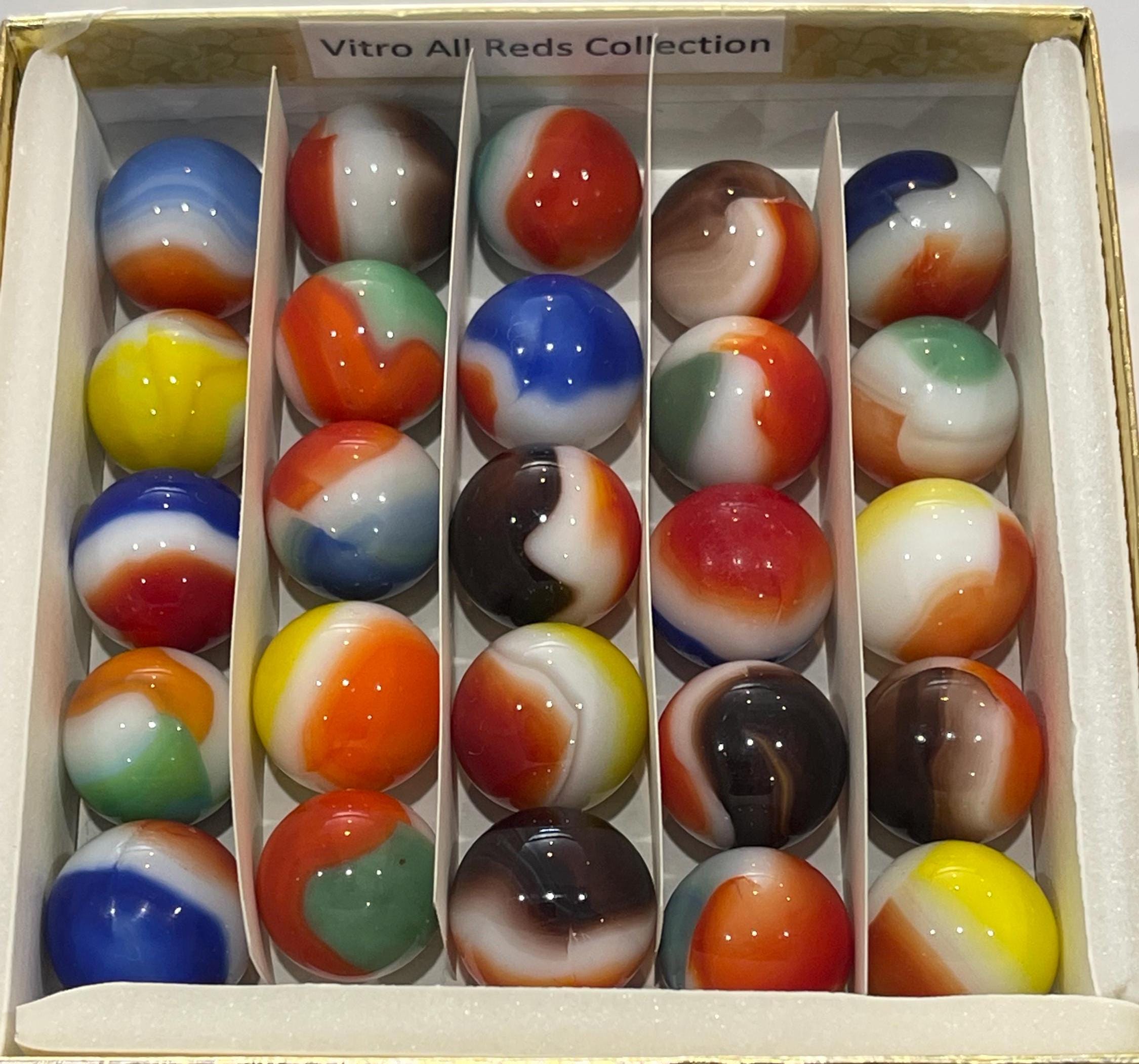
Toy marble types are far more diverse than most realize, spanning materials from glass and clay to steel, plastic, stone, and art glass. Glass marbles remain the most popular category, with subtypes like cat’s eye, crystal, and swirl each offering distinct aesthetics and collectible value. Understanding manufacturing methods helps identify age and origin, with handmade pieces commanding premiums over machine-made equivalents.
Collectors should focus on condition, size, and maker when evaluating worth, while players often prefer stone or steel marbles for their weight and precision in competitive games. Whether you’re drawn to the clink of a steely, the precision of a stone marble, or the beauty of a cat’s eye, there’s a marble type for every interest. Around the world, children still flick marbles in dirt rings, just as they did 4,500 years ago in Mohenjo-daro.