
If you’ve just picked up a toy bow and arrow set for your child, you might be wondering how to get them started safely and effectively. These engaging toys are designed for children ages 3 and up, featuring soft suction cup arrows and lightweight bows that build hand-eye coordination while keeping play completely safe. Whether you have a basic set or a model with LED lights and math games, knowing the right techniques makes all the difference between frustration and fun.
This guide walks you through every step from unboxing to advanced gameplay. You’ll learn how to assemble the set, aim properly, activate lighting features, play educational games, and maintain the equipment for years of use. With the correct approach, toy archery becomes a valuable tool for physical activity, cognitive development, and quality family time.
Assemble the Bow and Arrow Set Before First Use

Proper assembly ensures your toy works correctly and safely from the start. Most sets arrive in compact packaging with separate components that need connecting.
Attach the Quiver and Install Batteries
Slide the two quiver halves together until they click into place securely. For sets with LED lights, open the battery compartment on the quiver or bow handle and insert 2 AA batteries, matching the positive and negative symbols exactly. Close the compartment tightly to prevent battery damage during play.
Mount the Target at Child Height
Use screws, hooks, or adhesive mounts to attach the target to a wall, fence, or stand. Position it at chest to eye level for your child, making aiming comfortable and natural. If using an educational set with numbers, ensure the numbered side faces forward for math games.
Inspect All Arrows and Suction Tips
Check every arrow for damage. Wipe the rubber suction cups with a damp cloth to remove dust and debris. Clean tips grip surfaces better and extend the life of your arrows significantly.
Load the Arrow Correctly Every Time
Loading properly prevents misfires and helps your child develop good shooting habits from the beginning.
Position the Arrow on the Bowstring
Take one arrow from the quiver and place the nock (the grooved end) onto the bowstring at the designated notch or clip. Make sure it sits securely without forcing it into position.
Use the Stretchy Rope System
Many quivers feature an elastic rope that helps younger kids load arrows more easily. Push the arrow end into the elastic rope until it grips firmly, then lift the arrow up and onto the bowstring. This pre-tension system makes drawing the string much simpler for small hands.
Don’t Overfill the Quiver
Only load as many arrows as the quiver designed to hold, typically 6 to 10 per side in dual sets. Overfilling jams the elastic core and makes arrows difficult to remove.
Activate Lights for Exciting Night Play
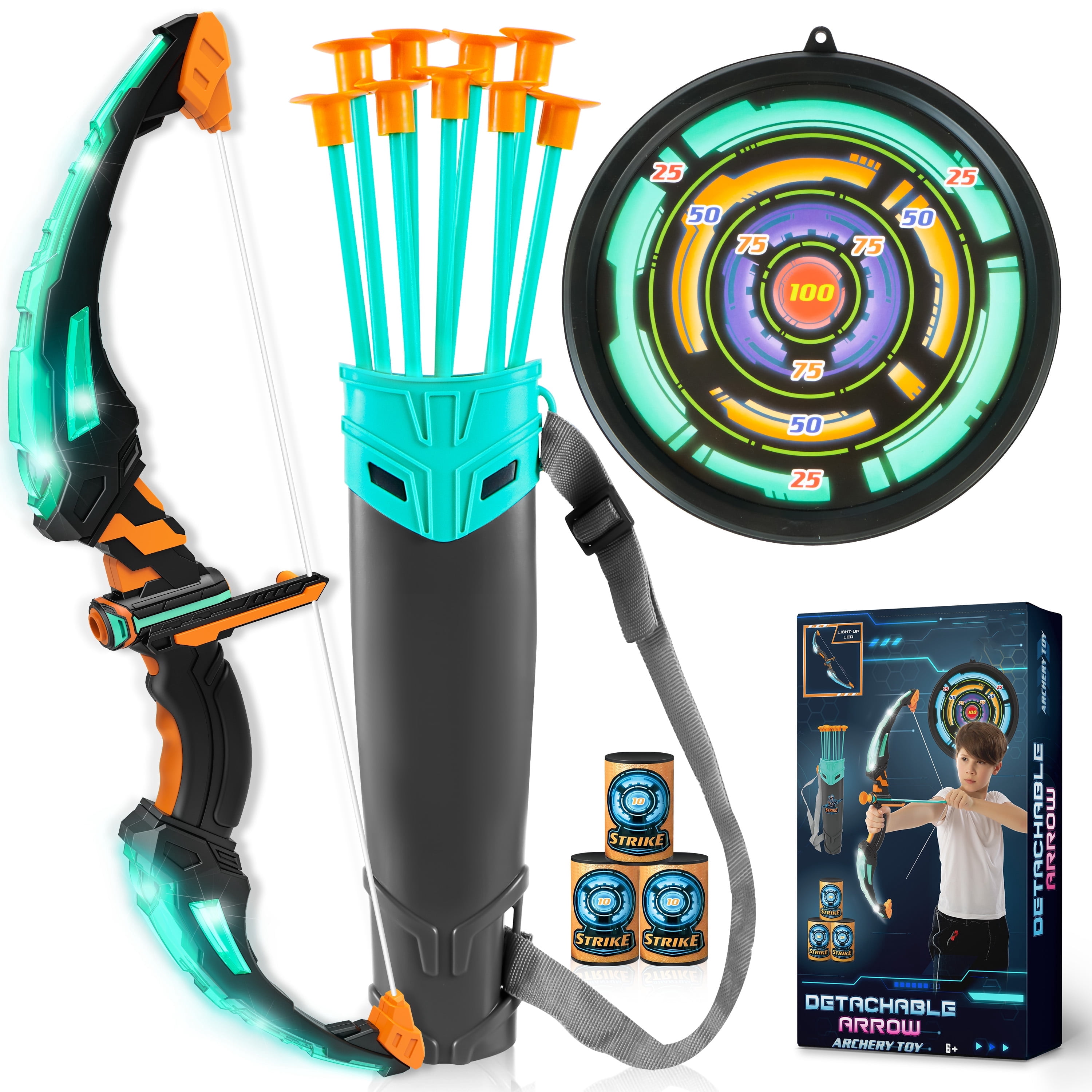
Modern toy bows often include LED features that transform evening play into something truly special.
Turn On Bow and Quiver Lights
Locate the power switch on the bow handle or quiver and flip it to the on position. Most models offer three distinct modes including steady glow for constant visibility, flashing for attention-grabbing group play, and pulsing for dramatic imaginative games. Test each mode to see which your child enjoys most.
Extend Battery Life
Remove batteries when the toy won’t be used for more than a week. Store them separately in a cool, dry location to prevent corrosion and maximize lifespan.
Aim With Proper Stance and Focus
Good aim starts with correct body positioning and mental focus, skills that improve dramatically with practice.
Stand at the Right Distance
Begin 6 to 10 feet from the target when playing indoors. Outdoor play allows for 10 to 15 feet once your child develops better accuracy. Standing too close causes arrows to bounce off, while standing too far makes hitting the target difficult for beginners.
Use the Correct Shooting Stance
Stand sideways to the target with feet shoulder-width apart. Hold the bow with your non-dominant hand while pulling the string back with your dominant hand, anchoring near your cheek. Keep arms steady and eyes focused on the target throughout the shot.
Younger children may need physical assistance balancing. Encourage slow breathing and deliberate aiming for the best results.
Release the Arrow Safely and Effectively
The moment of release determines accuracy, so smooth technique matters more than power.
Pull and Release in One Fluid Motion
Draw the string back smoothly without yanking or overstretching. Release with a clean, fluid motion rather than a jerky pull. Inconsistent release causes arrows to veer off course unpredictably.
Never point the bow at people, pets, or breakable objects even with soft arrows. Close-range impact can still cause discomfort or injury.
Observe Flight Patterns
Watch how each arrow travels through the air. Arrows that bounce off may indicate rough or wet surfaces. Arrows that curve sideways suggest bent shafts or uneven suction cups. Arrows falling short point to low string tension or weak draws. Use these observations to diagnose and fix problems.
Retrieve Arrows Without Causing Damage
Safe arrow retrieval keeps the game going smoothly and protects your equipment.
Pull Straight Back When Removing Arrows
Grip the arrow firmly and pull directly backward from the target. Never twist the arrow while removing it, as twisting tears the rubber suction cup edges and ruins them over time.
Return Arrows to the Quiver Immediately
Place arrows back in the quiver right after retrieval to prevent tripping hazards and keep everything organized for the next round of play.
Play Educational Archery Games
Transform practice sessions into learning opportunities with fun, skill-building challenges.
Add Up Scores for Math Practice
Use numbered targets to play math games with your child. When they hit different zones, have them add the numbers together aloud. For example, hitting 7, then 3, then 5 gives you 7 plus 3 equals 10, plus 5 equals 15. Write scores on paper to practice number writing and tracking.
Start with simple numbers between 1 and 5, then gradually progress to harder sums as their math skills improve.
Track Progress Weekly
Create a simple score chart on paper or a whiteboard. Record daily totals and celebrate improvements to build confidence and motivation. This turns archery into a rewarding learning experience.
Adjust Tension for Your Child’s Skill Level
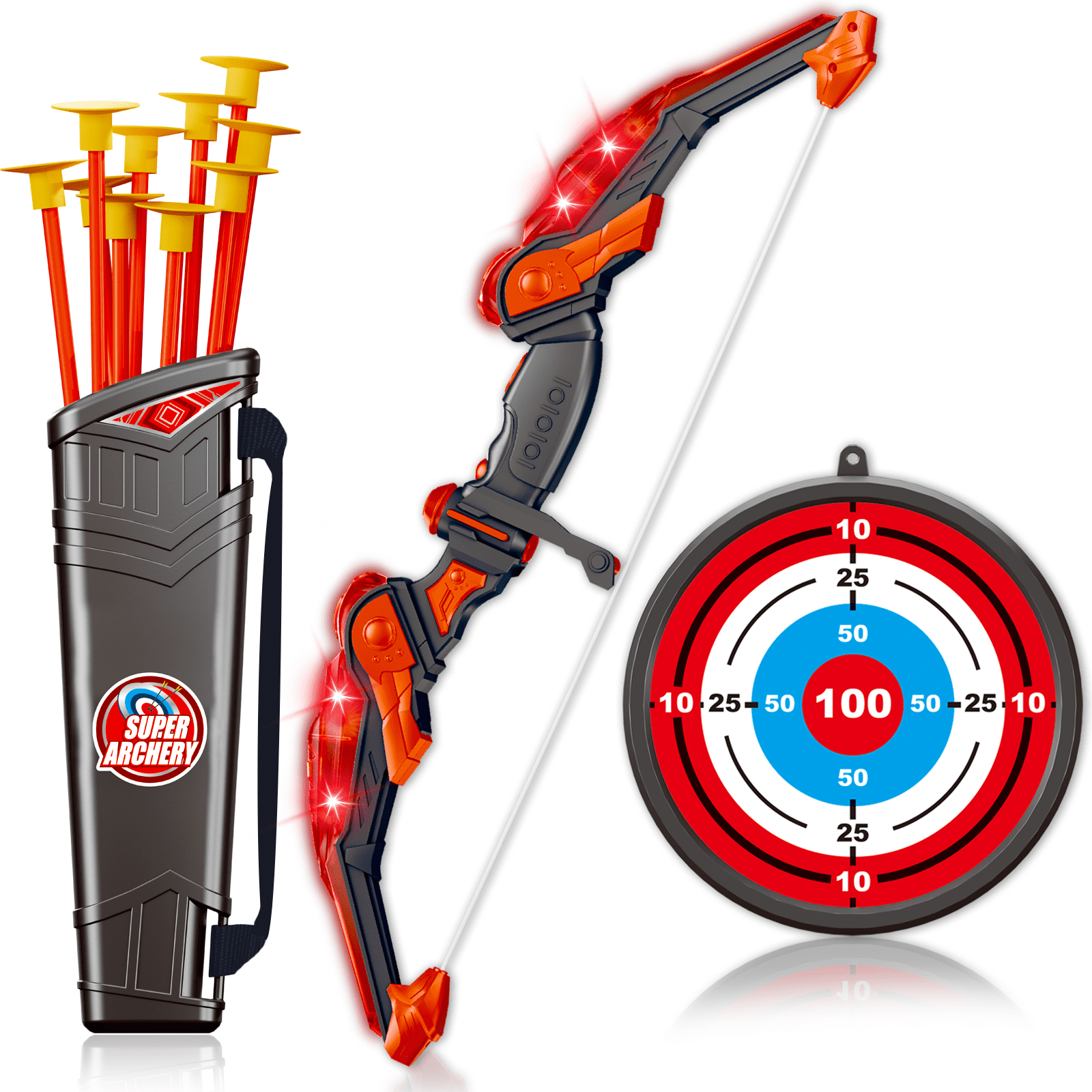
Many sets let you customize how hard the bow is to pull, perfect for growing kids.
Tighten or Loosen the Elastic Rope
Inside the quiver, a stretchy core connects to a metal nut. Looser tension works better for ages 3 to 5, while tightened tension suits ages 6 and older with stronger hands. To tighten, pull the elastic rope slightly tighter and secure it with the nut in the next notch. Test the draw to ensure it feels firm but not straining.
Retighten the tension occasionally as the elastic naturally loosens over time with use.
Follow Safety Rules Every Single Time
Consistent safety habits protect your child and everyone else during play.
Supervise Children Under Age 6
Kids under 6 haven’t fully developed impulse control. An adult should load arrows, confirm the target zone is clear, and give the shoot signal. Never leave a loaded bow unattended or allow unsupervised play.
Use Only in Safe Zones
Play in open areas like backyards, garages, or large living rooms. Avoid narrow hallways, rooms with glass or fragile decorations, and crowded spaces. Set clear boundaries with your child, such as only shooting when the target is up and everyone stands behind the designated line.
Maintain the Set for Long-Lasting Use
Regular care keeps your toy bow and arrows working like new for years.
Clean Suction Cups Weekly
Wipe the rubber tips with a damp cloth and mild soap after each play session. Rinse thoroughly and air-dry completely before storing. Oils and dust from hands block suction performance, so regular cleaning makes a real difference.
Avoid alcohol or harsh chemical cleaners, as these degrade rubber and cause cracking.
Store Components Properly
Keep the bow in a dry, shaded location away from direct sunlight, which warps plastic over time. Store arrows in the quiver to prevent bending and damage. If storing long-term, disassemble the quiver and keep everything in a single container.
Fix Common Problems Quickly
When issues arise, troubleshooting takes only minutes.
Arrows Won’t Stick to Target
Dirty suction cups, textured walls, or wet surfaces cause this common problem. Clean the tips thoroughly and use the arrows on smooth surfaces like painted walls, glass doors, or garage doors.
Lights Won’t Turn On
Dead or incorrectly installed batteries are usually the culprit. Replace with fresh AA batteries, double-checking that polarity matches the compartment markings.
Bowstring Feels Loose
Worn elastic or a loose nut inside the quiver reduces string tension. Re-tighten the tension nut or replace the internal elastic rope if needed.
Frequently Asked Questions About Toy Bow and Arrow Sets
What age is appropriate for toy bow and arrow play?
Most toy bow and arrow sets are designed for children ages 3 and up. Younger children around ages 3 to 5 may need adult assistance with loading and aiming, while children 6 and older typically manage independently with proper supervision.
Can toy arrows hurt my child?
Toy arrows feature soft rubber suction cups designed specifically for safe indoor play. They cannot penetrate skin or cause serious injury, though they may feel uncomfortable if shot at very close range. Always supervise play and remind children never to aim at faces.
How far should my child stand from the target?
Beginners should stand 6 to 10 feet indoors and 10 to 15 feet outdoors. As accuracy improves, the distance can gradually increase. Starting too close causes arrows to bounce off, while standing too far frustrates beginners.
How do I clean suction cup arrows?
Wipe the rubber tips with a damp cloth and mild soap after each use. Rinse well and air-dry completely before storing. Avoid harsh chemicals or alcohol, which damage the rubber and reduce suction effectiveness.
Are LED lights safe for children?
Yes, LED lights in toy archery sets are low-voltage and completely safe. They add exciting visual effects for nighttime play but consume minimal power. Simply remove batteries if the toy won’t be used for extended periods.
Can toy archery help my child learn math?
Absolutely. Numbered target sets like the Add-It-Up Archery Set turn scoring into addition practice. Children add up their points after each round, developing math skills while having fun. Tracking scores over time also builds writing and organizational abilities.
Key Takeaways for Using Toy Bow and Arrow Sets Successfully
Toy bow and arrow play offers far more than simple entertainment. These sets build hand-eye coordination, focus, patience, and confidence in children while providing valuable physical activity. The suction cup design makes them safe for indoor use on smooth surfaces, and many models include educational features like numbered targets for math practice or LED lights for exciting nighttime games.
Success starts with proper assembly and loading technique, followed by teaching your child the correct stance and aiming method. Consistent safety supervision ensures everyone stays protected while having fun. Regular maintenance, including cleaning suction cups and proper storage, extends the life of your set significantly.
With the right approach, a toy bow and arrow becomes a favorite activity that grows with your child through adjustable tension settings and increasingly challenging games. Start with simple games close to the target, then progress to math challenges and longer distances as skills develop. Your child will gain valuable developmental benefits while having a blast.