You have got a kazoo in your hand, bright and buzzing with potential. But how do you actually play it? Unlike flutes or harmonicas, the kazoo does not rely on blowing air to make sound. Instead, it transforms your voice into a playful, buzzing melody. The good news is anyone who can hum can play a kazoo, no musical experience needed.
This guide shows you exactly how to use a kazoo toy, from holding it correctly to mastering pitch control and expressive techniques. Whether you are using a plastic kazoo from a party pack or a sleek metal model, you will learn to produce a clear tone, play simple melodies, and avoid common mistakes.
Choose the Right Kazoo
Picking the best kazoo depends on your purpose, not sound quality, since all types work the same way.
Plastic vs. Metal vs. Wood
Plastic kazoos cost between one and three pounds and are ideal for children, classrooms, or group events. They are lightweight, colorful, and durable enough for short term use but may crack over time.
Metal kazoos typically cost two to five pounds and offer a richer, more resonant buzz that lasts for years. Many have replaceable membranes, making them a favorite among performers.
Wooden kazoos can cost up to ten pounds and deliver a warm, mid-range tone. They often come with cases and are great for collectors, but you must keep them away from moisture to prevent warping.
While metal and wood feel more premium, sound differences are subtle. For beginners, a plastic kazoo is perfectly functional.
Select for Purpose
For kids or schools, use plastic kazoos because they are affordable and safe. For performing or practicing seriously, go for metal or wood. If you want to personalize your kazoo, add a sticker or store it in a labeled eyeglass case to avoid losing it.
Know the Parts of a Kazou

Understanding the three main components helps you use the instrument correctly.
Body, Membrane, and Cap
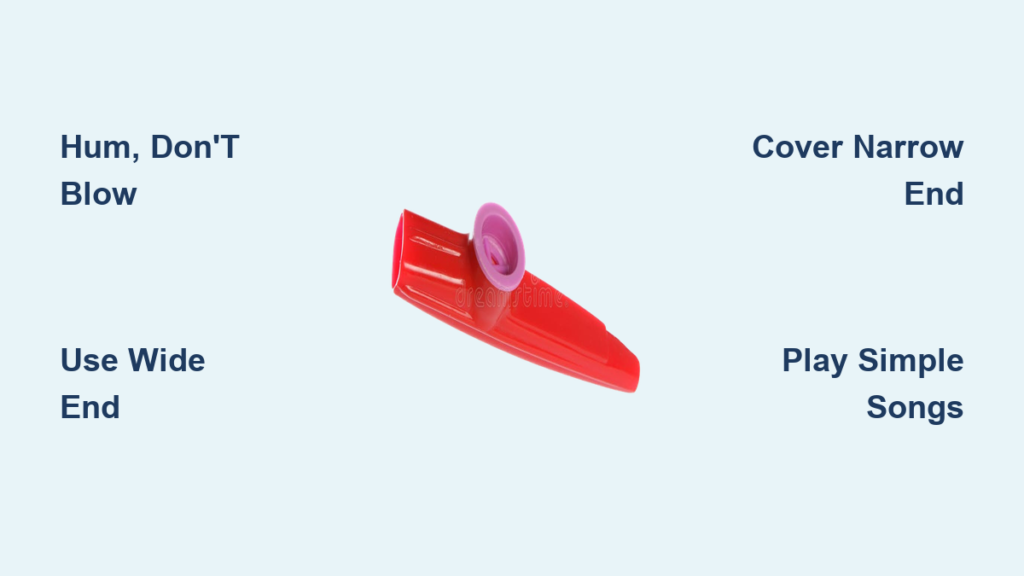
The body is the four to six inch tube you hold, which channels your hum to the membrane. The membrane is a thin wax paper or plastic film inside the wide end that vibrates when you hum, creating the buzz. The resonator cap is the perforated top cover that amplifies the sound, and it should remain uncovered during play.
Find the Mouthpiece
The wide end is the mouthpiece where you place your lips. The narrow end is left open or partially covered with a finger to change pitch.
Never hum into the small end because you will get weak or no sound. Always use the wide end.
Play the Kazoo: Step-by-Step
You do not blow, you hum. That is the secret to playing a kazoo.
Hum, Do Not Blow
Hold the kazoo with the wide end near your lips. Form a loose seal with your lips, similar to playing a harmonica, without pushing it deep into your mouth. Hum a steady note and let the vibration travel into the kazoo, making the membrane buzz. If you do not hum, you will not get any sound. Blowing air alone does nothing.
Practice humming doo-doo without the kazoo first, then repeat with it. The pitch you hum is the pitch you hear.
Control Pitch with Your Finger
Cover the narrow end with your finger to lower the pitch. Leave it open for a higher, brighter tone. Rapidly open and close the narrow end to mimic wind instruments or add rhythm to your playing.
This simple technique lets you play melodies like Happy Birthday or The Entertainer.
Shape Sound with Vocal Tricks
Use different syllables to create rhythm and expression. Doo-doo creates a smooth melody. Ba-ba gives a bouncy, rhythmic feel. Who creates a sliding, dramatic effect. Brr or Rrr adds a drum-like texture.
Try rolling your r sounds for a percussive kazoo beat.
Master Advanced Techniques
Once you have got the basics down, add some flair to your playing.
Create a Wah-Wah Effect
Lightly cover and uncover the resonator cap, the top opening, with your finger while humming. This mimics a wah pedal on a guitar and works great for jazz or comedy tunes.
Adjust Tone on the Fly
Some metal kazoos have a crosshatched top design. Press lightly to increase membrane tension and deepen the tone. Experiment with pressure because too much kills the vibration.
Sing and Hum Simultaneously
Try humming into the kazoo while softly singing the same note. This boosts volume and adds richness to your sound.
Play Real Melodies
The kazoo follows your voice, so any tune you can hum, you can play.
Start with Simple Songs
Try Twinkle Twinkle Little Star, Happy Birthday, The Lion Sleeps Tonight, or Can not Take My Eyes Off You. Use finger control on the narrow end to match the pitch changes in these melodies.
Read Kazoo Sheet Music
Kazoo music uses standard notation and focuses on rhythm, dynamics, and articulation. Since the kazoo copies your hum, you do not need perfect pitch, just consistent humming.
Practice Like a Pro
Even simple instruments need practice to sound good.
Build Muscle Memory
Hum a melody without the kazoo first, then repeat with it. Start with single sustained notes to stabilize the buzz. Focus on keeping your hum steady without wavering.
Set Daily Goals
Practice ten to fifteen minutes every day. Track your progress by noting what songs you tried and whether your tone improved. Work on pitch accuracy, rhythmic timing, finger coordination, and dynamic changes from loud to soft.
Record Yourself
Use your phone to record practice sessions. Listen for consistent buzz, clear articulation, and smooth transitions between notes. Recording is the fastest way to spot areas that need improvement.
Use Cases and Who Should Play
The kazoo is not just a toy, it is a versatile tool.
For Children Ages Four and Up
The kazoo helps develop rhythm, listening skills, and vocal control. It is fun for sensory play and music time. Use it in group activities like kazoo parades or classroom jams.
For Educators
The kazoo teaches pitch matching and melody without complex fingerings. It encourages shy students to vocalize. It is great for inclusive music lessons.
For Therapists
The kazoo supports speech therapy by promoting vocalization. It helps with breath control and respiratory strength. It engages clients through playful sound-making.
For Performers and Entertainers
The kazoo adds humor or retro charm to acts. It is used in novelty bands like The Kazoo Funk Orchestra. It is ideal for busking because short, catchy tunes grab attention.
Maintain Your Kazoo
Keep your kazoo clean and working for years to come.
Clean Safely
Wipe the mouthpiece with a damp cloth after each use. Never submerge your kazoo in water because moisture ruins the membrane. Avoid getting the top wet.
Replace the Membrane
When the buzz fades or stops, remove the resonator cap if it is screw-on. Replace the film with wax paper, plastic wrap, or specialty replacement membranes. Stretch it taut and reattach the cap securely. Hum a note to test. If it buzzes clearly, it is ready.
Store Properly
Keep your kazoo in a dry place because moisture warps wood and damages membranes. Use a hard-shell case like an old eyeglass case to prevent dents. Polish wooden models occasionally to preserve the finish.
Debunk Common Myths
Let us clear up the confusion about kazoos.
You Blow Into It Like a Flute
This is false. Blowing does nothing. You must hum to create vocal vibrations that make the membrane work.
The Small End Is the Mouthpiece
This is wrong. Always use the wide end for your lips.
Only Good Singers Can Play
This is a myth. If you can hum, you can play. Singing skill is not required.
Metal Kazoos Sound Much Better
This is overstated. Metal may sound slightly richer, but all kazoos perform the same way.
Play Respectfully
The kazoo is buzz can be fun or annoying depending on where you play.
Mind the Noise
Avoid long sessions in quiet spaces like apartments or libraries. Do not play late at night or early morning. Limit continuous use to prevent auditory fatigue in others.
Supervise Kids
Small parts like the cap and membrane are choking hazards. Teach proper use to prevent frustration. Prevent disassembly during play.
Compare to Similar Instruments

The kazoo has a unique place among instruments.
| Feature | Kazoo | Recorder | Harmonica |
|---|---|---|---|
| Sound Source | Hum plus membrane | Air plus fipple | Air plus reeds |
| Learning Curve | Very low | Moderate | Moderate to high |
| Cost | One to ten pounds | Five to twenty pounds | Ten to fifty pounds plus |
| Portability | Fits in pocket | Compact | Compact |
| Skill Needed | Can hum | Finger dexterity | Breath control |
The kazoo wins on accessibility. It is the easiest instrument to start playing instantly.
Key Takeaways for Using Your Kazoo Toy
Your voice is the instrument and the kazoo simply amplifies it. Practice daily, even if just for a few minutes. Experiment with syllables, finger tricks, and wah effects to find your sound. Play with others because kazoos shine in groups. Most importantly, have fun because the kazoo is supposed to be joyful.
The kazoo is not about perfection. It is about expression. Whether you are in a school band, a therapy session, or a backyard jam, the sound you make is uniquely yours. Grab your kazoo, hum a tune, and let the buzz begin.
Frequently Asked Questions About Using a Kazoo Toy
Do you blow into a kazoo or hum into it?
You hum into a kazoo, not blow. The kazoo requires vocal vibration from humming to make the membrane buzz. Blowing air alone produces no sound.
Which end of the kazoo do you use?
Always use the wide end as the mouthpiece. The narrow end is for covering with your finger to change pitch. Using the small end results in weak or no sound.
Is the kazoo easy for beginners to learn?
Yes, the kazoo has a very low learning curve. Anyone who can hum can play a kazoo immediately. No musical experience or special skills are required.
Can you play actual songs on a kazoo?
Yes, you can play any melody you can hum. Simple songs like Twinkle Twinkle Little Star, Happy Birthday, and The Entertainer work well. The kazoo follows your voice, so pitch accuracy improves with practice.
How do you maintain a kazoo?
Keep the mouthpiece clean by wiping it with a damp cloth after use. Never submerge the kazoo in water because moisture damages the membrane. Store it in a dry place and replace the membrane when it stops buzzing properly.